To view this content, you must be a member of Frances's Patreon at $1 or more
Already a qualifying Patreon member? Refresh to access this content.
In this issue of Hands All Around, writer and quilter Frances Dowell discusses how the practice of sustainable quilting makes us mindful of the past as we consider the impact of our craft on future generations. Frances O’Roark Dowell is a novelist and quilter who often writes about quilts and quiltmakers. Her books include Birds in the Air, Margaret Goes Modern and Friendship Album, 1933. She is a long-time board member of the Quilt Alliance, an organization that serves to document quilts and quilt stories.
In this issue of Hands All Around, writer and quilter Frances Dowell explores the beauty of everyday quilts, the ones that get used and used up, spilled on and torn. Why are these workaday quilts the ones so many of us care most about?
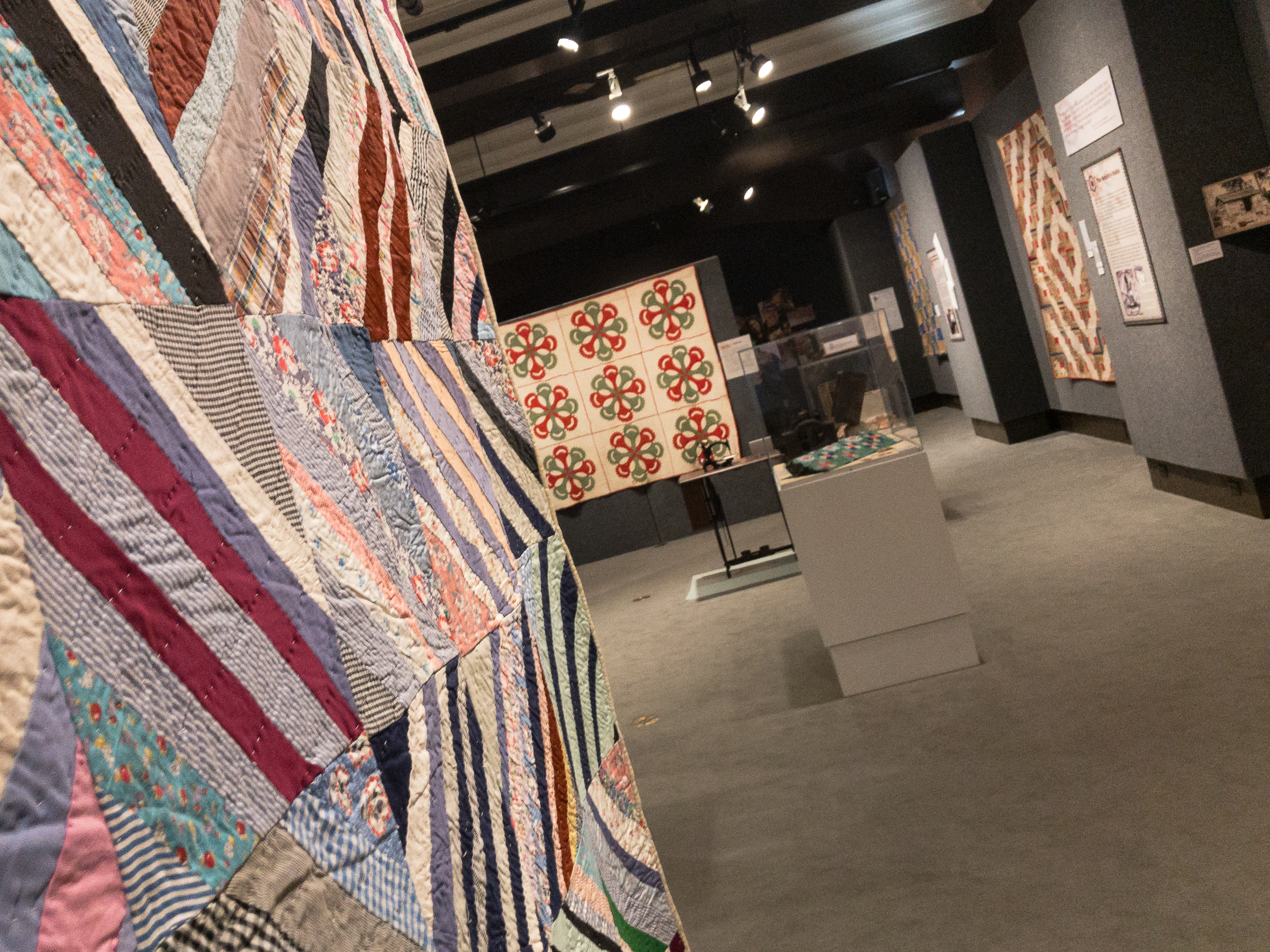
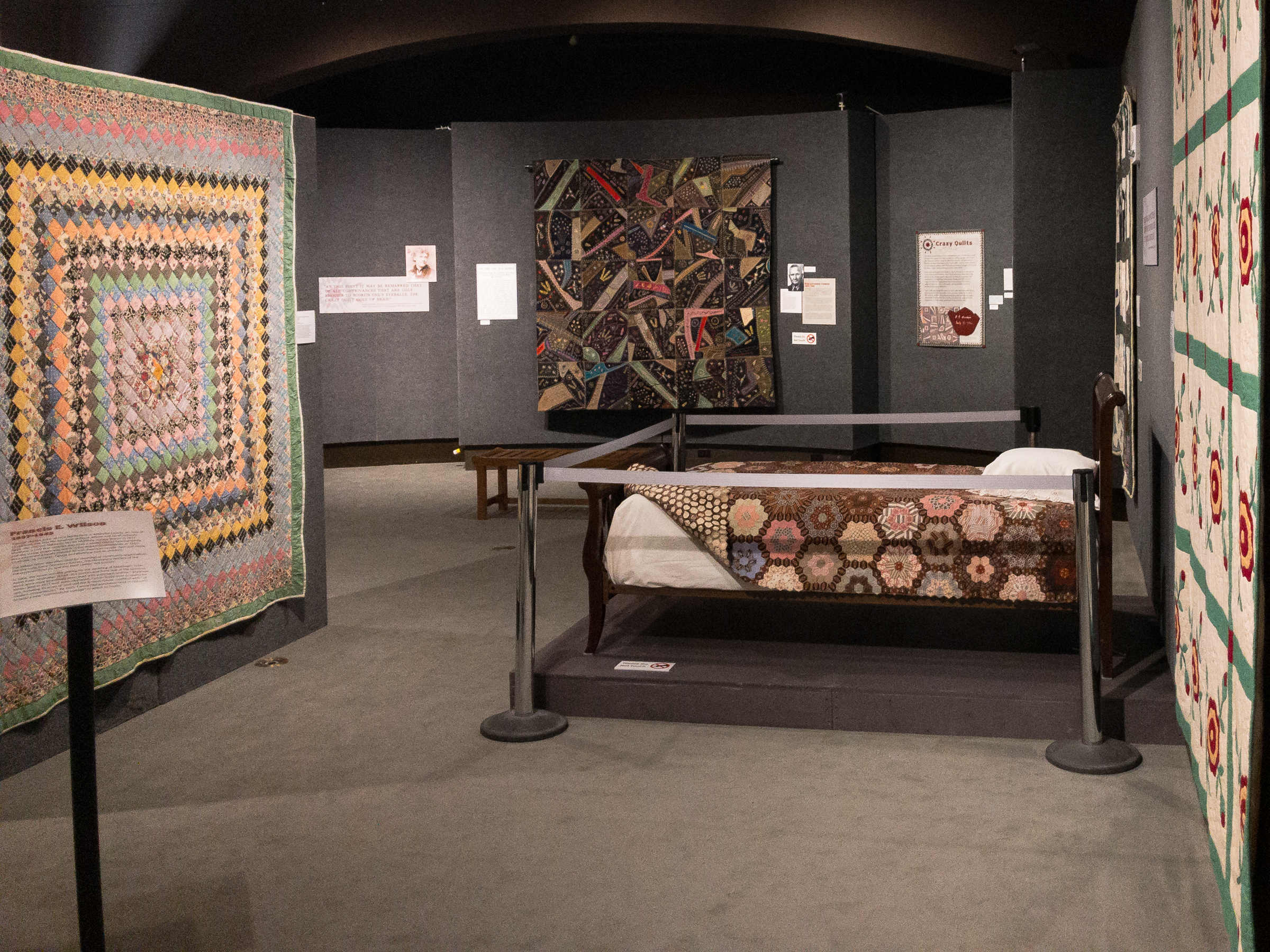
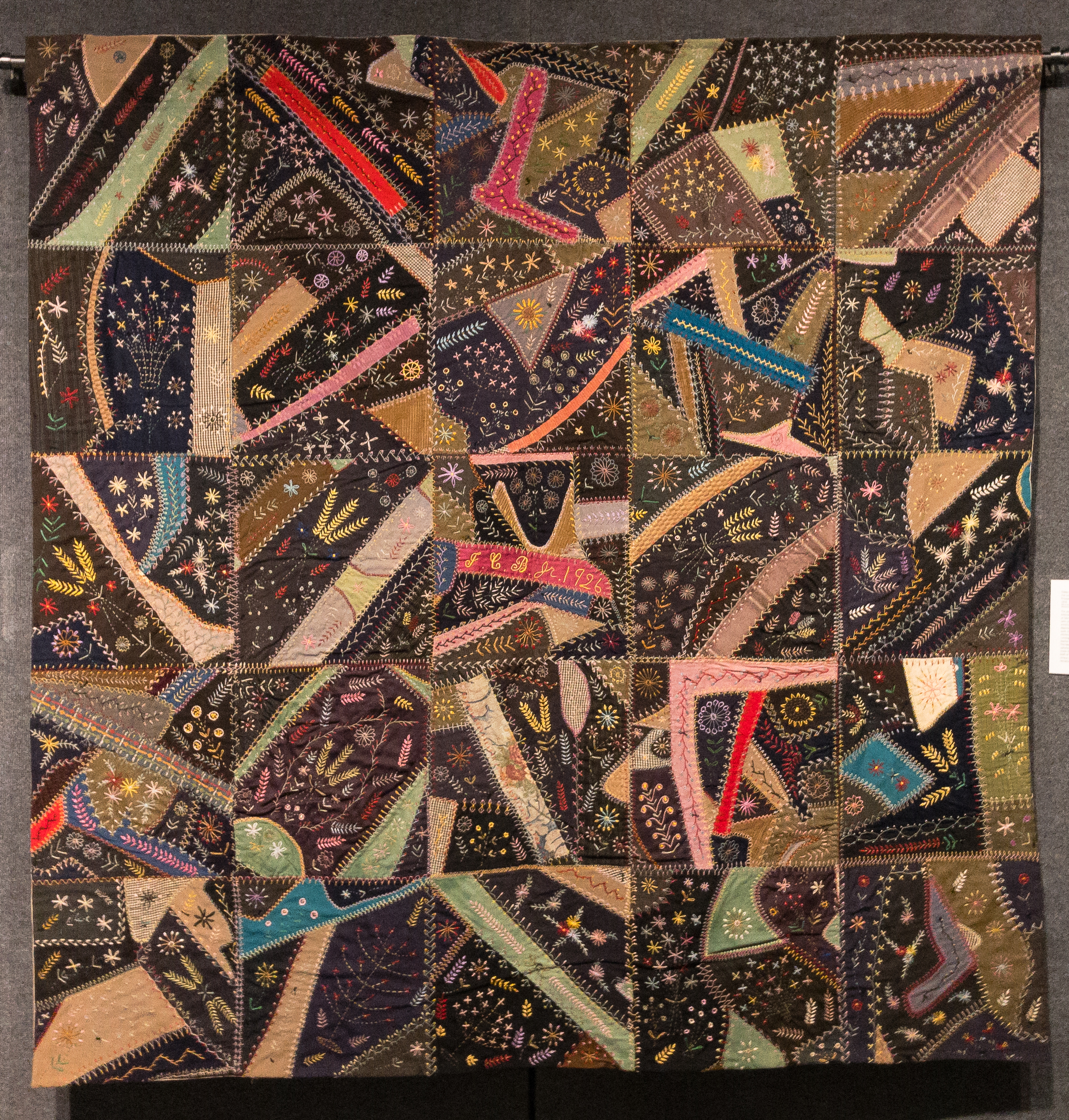
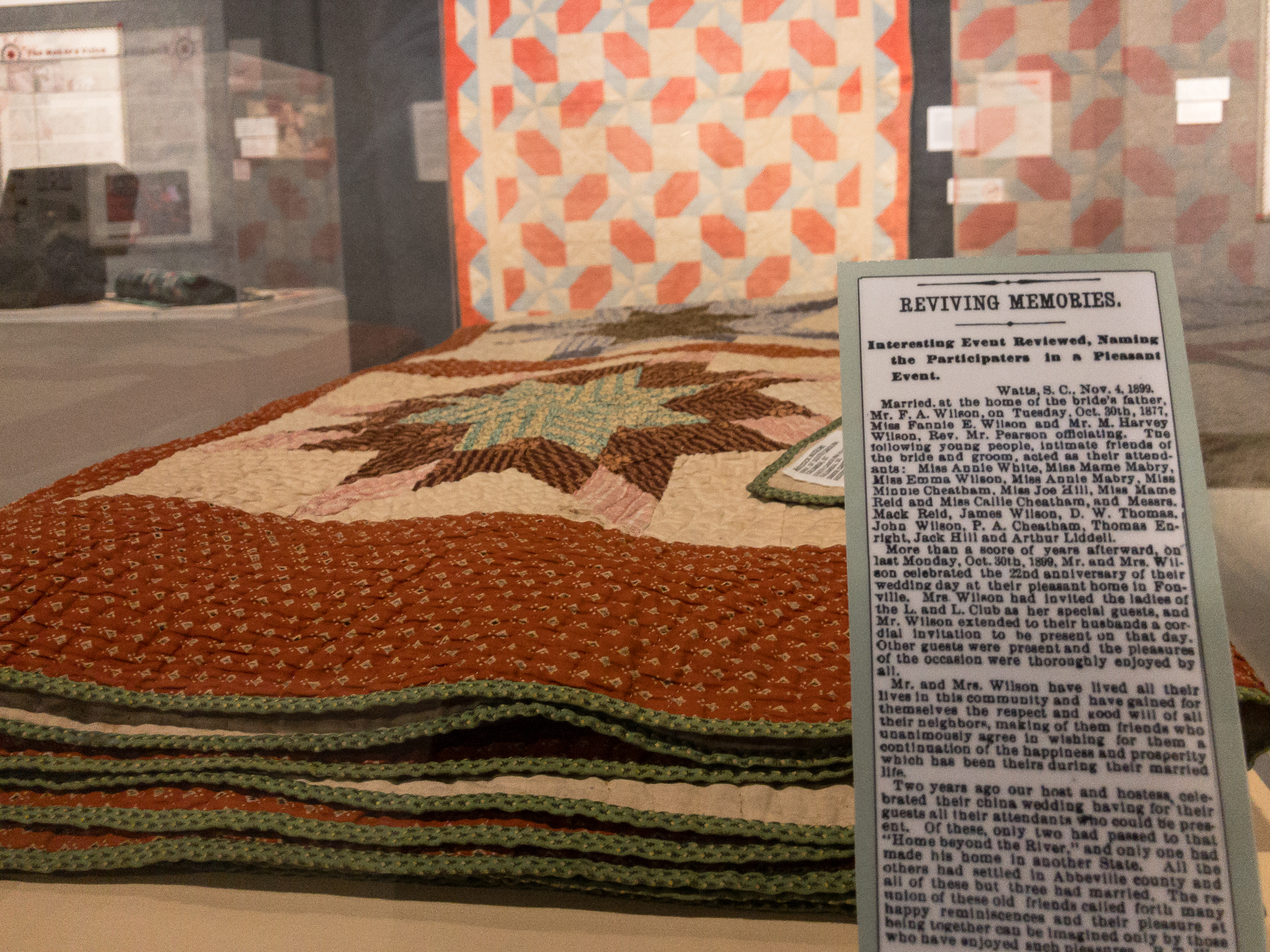
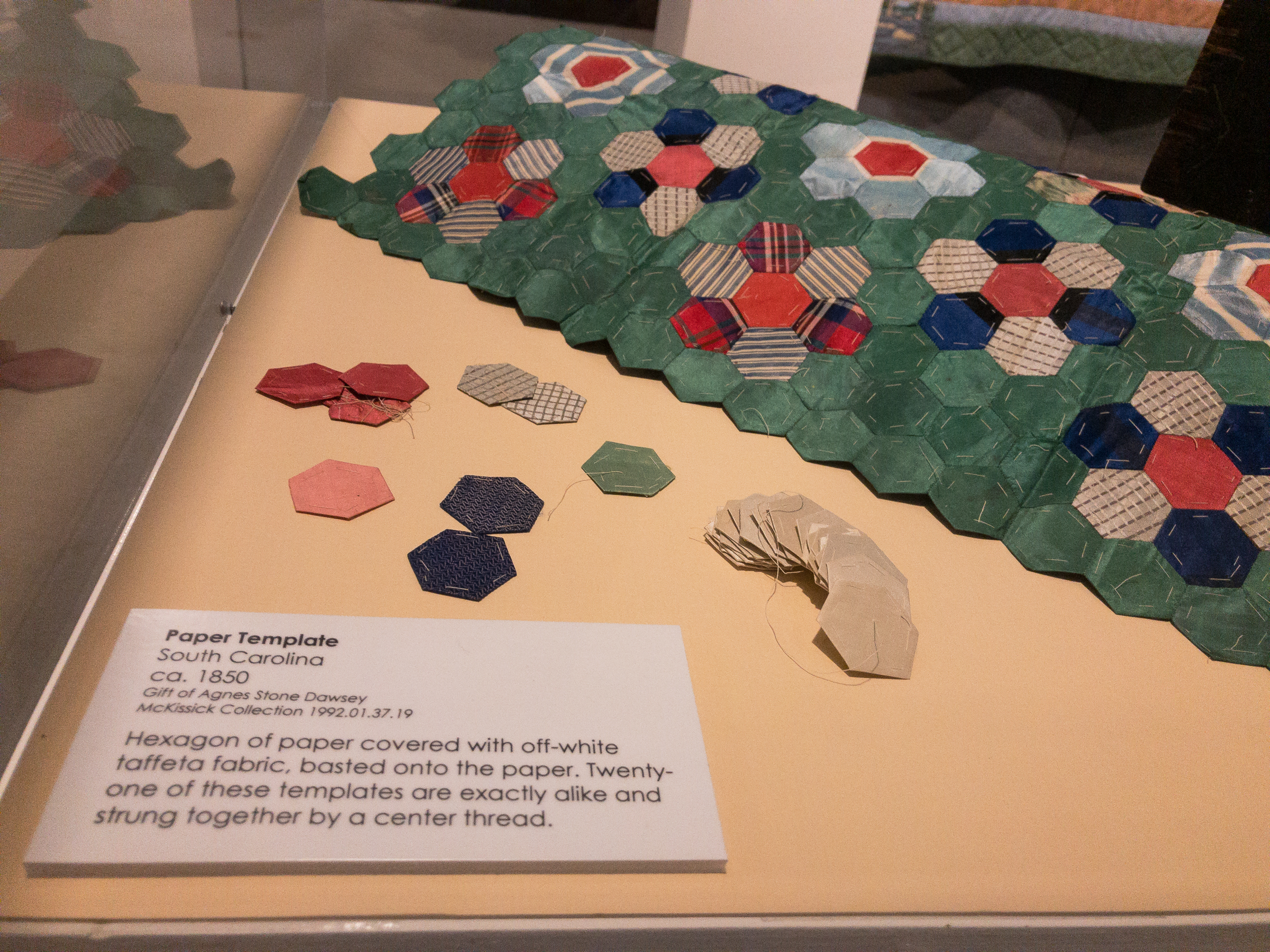
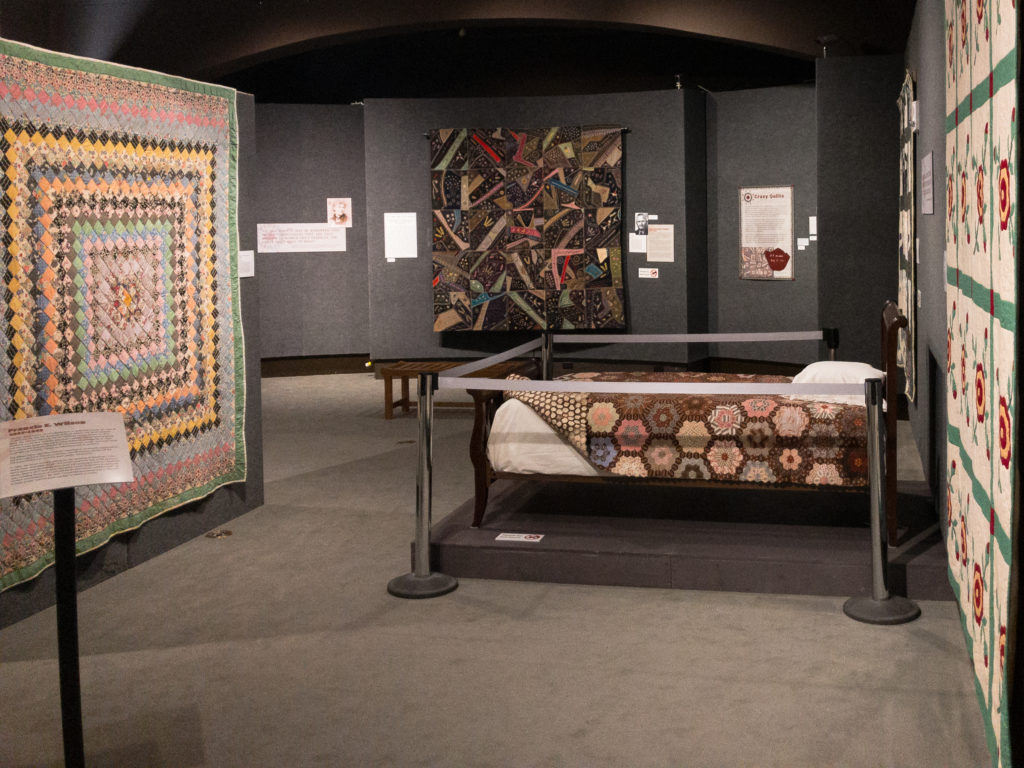
Happy National Quilting Day! I know most of us will be celebrating within the comfort of our own homes, but that doesn’t mean you can’t take a virtual tour of a wonderful quilt exhibit! Recently, my husband and son took a trip to the University of South Carolina in Columbia for a college visit. Much to my delight, they returned home with photos to the McKissick Museum, which is currently hosting the exhibit, “Piece by Piece: Quilts from the Permanent Collection.” I thought you might enjoy these quilt pix as much as I did!
From the McKissick’s description of the exhibit:
“Piece by Piece: Quilts from the Permanent Collection” illustrates the evolution of this textile tradition over the past one hundred and fifty years. From the early use of chintz fabrics to the widespread popularity of solid colors, these quilts reflect traditions with roots in Europe, Africa, and the American South. Visitors will have the opportunity to view 40+ quilts over the course of the show, chosen from McKissick Museum’s extensive quilt collection. Due to the fragile nature of historic textiles, individual quilts will be only be displayed for a limited time, with three rotations occurring throughout the year.
Established in 1976, the McKissick Museum is located at the heart of the historic Horseshoe on the University of South Carolina’s campus. Our collections date back to 1801 and provide insight into the history of the university and the community, culture, and environment of the American South.
Enjoy the quilts! P.S. To stay up-to-date on all of our news here at Quiltfiction, including new podcast episodes and special events, be sure to sign up for the Quiltfiction newsletter!
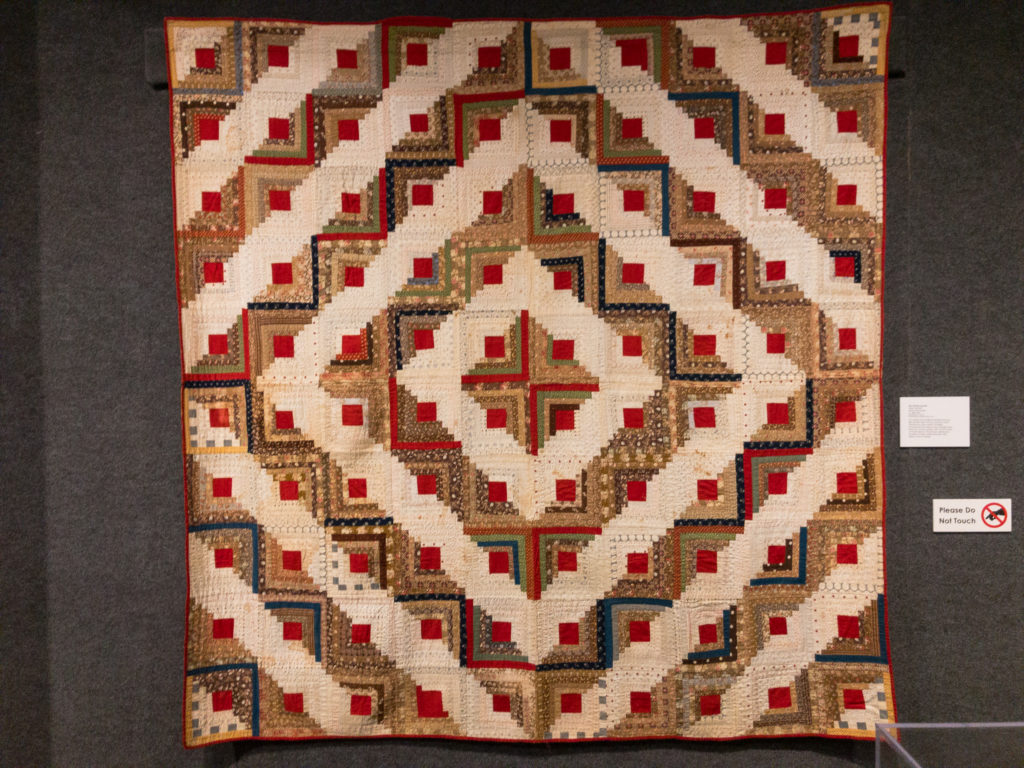
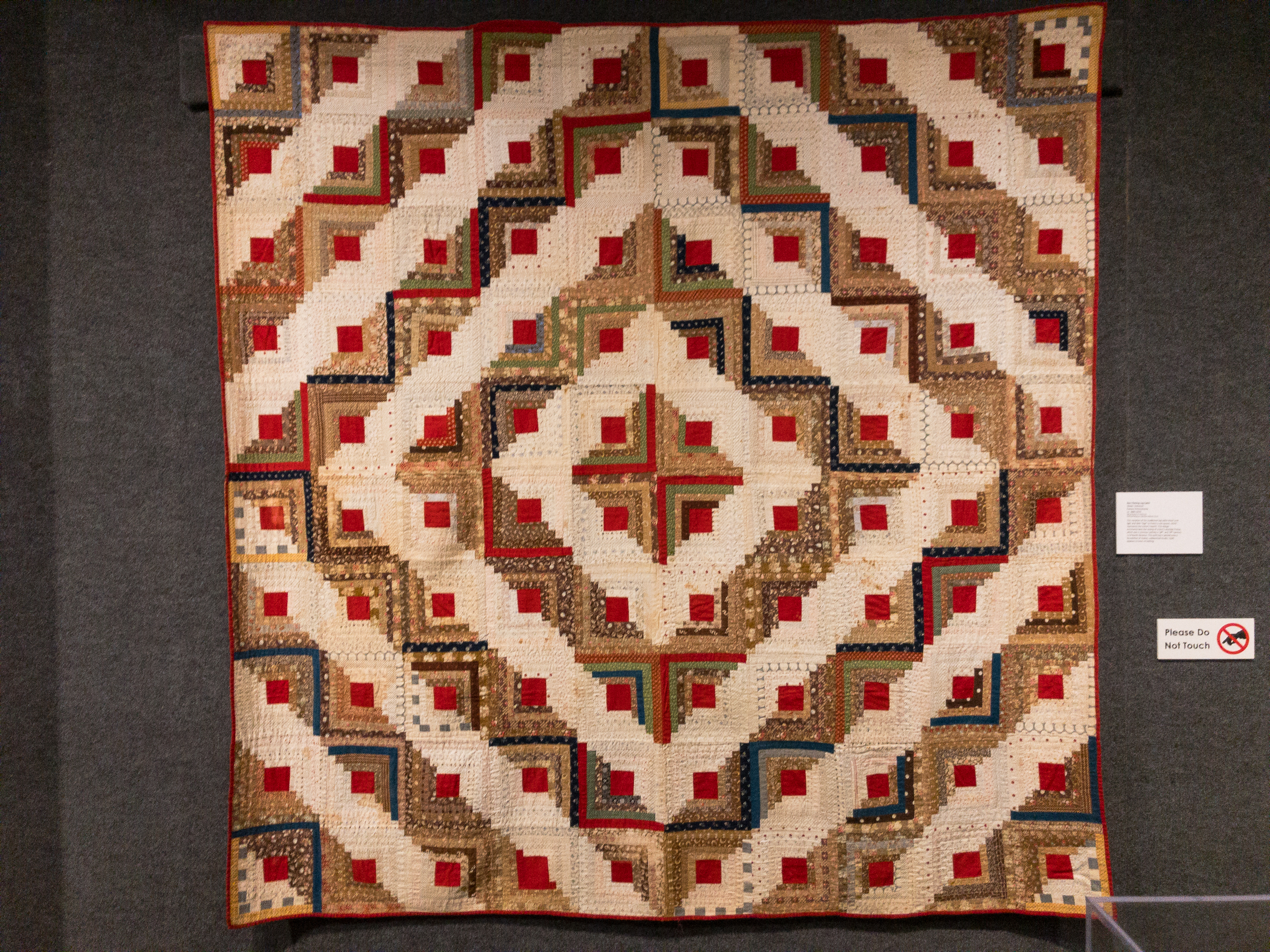
Barn Raising Log Cabin
Maker Unknown
Eastern Pennsylvania, ca. 1880-1910
Gift of Stephen H. Ackerman
This variation of the traditional log cabin block uses light and dark “logs” to frame a red square, which represent’s the home’s hearth. (McKissick Museum Collection 1998.09.112.02)
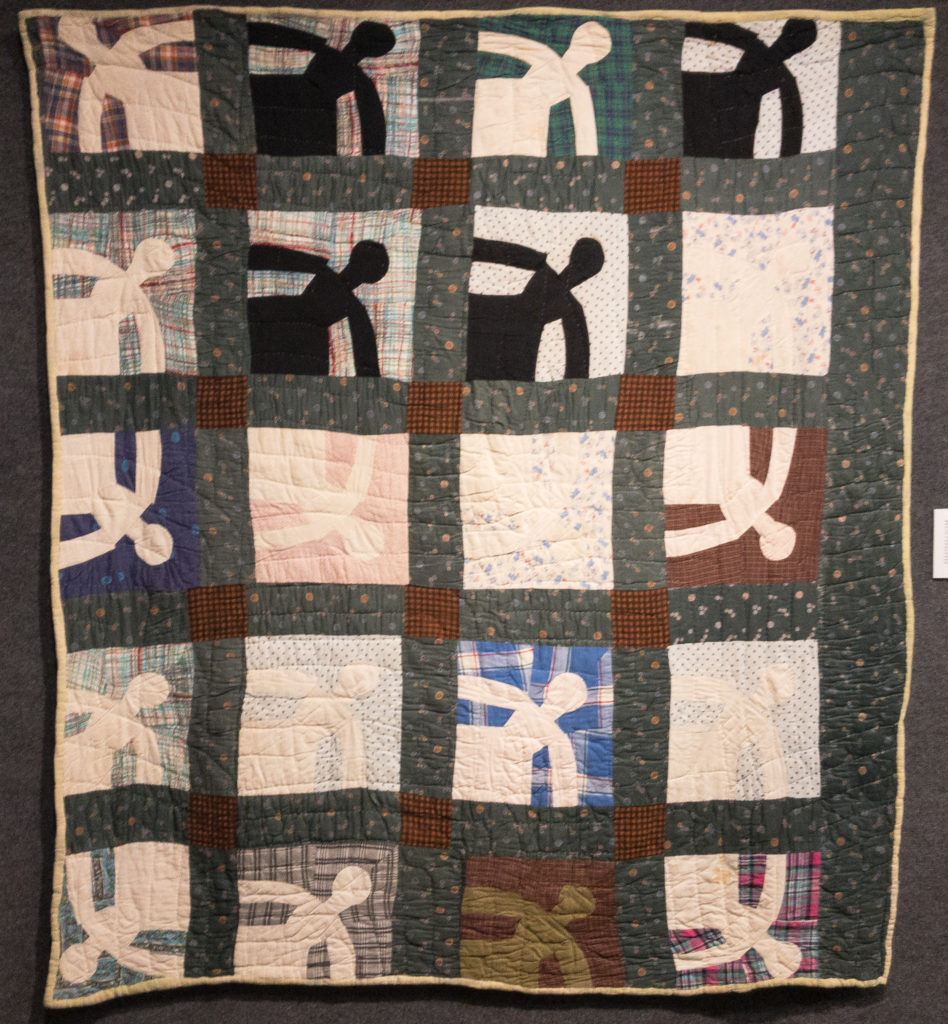
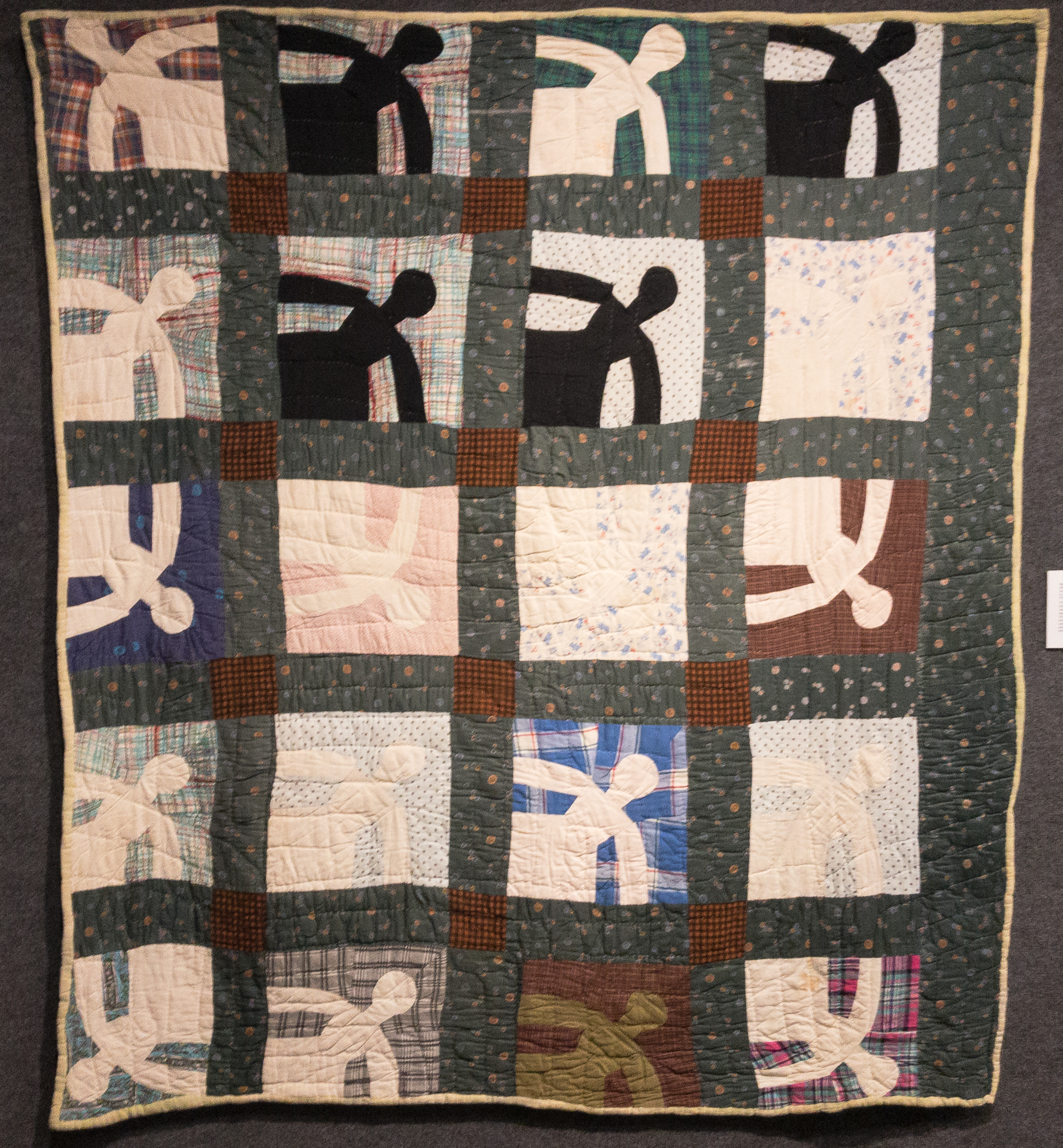
Figurative Applique, Original Pattern
Maker Unknown
Southeast. Ca. 1950
The block-style quilt features 20 0ff-white, black and brown female figures with outstretched arms. It appears the maker of this quilt may have adapted a paper doll pattern for her original design. The figures on some blocks are entirely machine pieced; other have machine-pieced bodies with hand appliquéd heads, suggesting perhaps more than one person worked on the quilt. It is hand-quilted in a clam shell pattern. (McKissick Museum Collection 2001.11.XX.01)
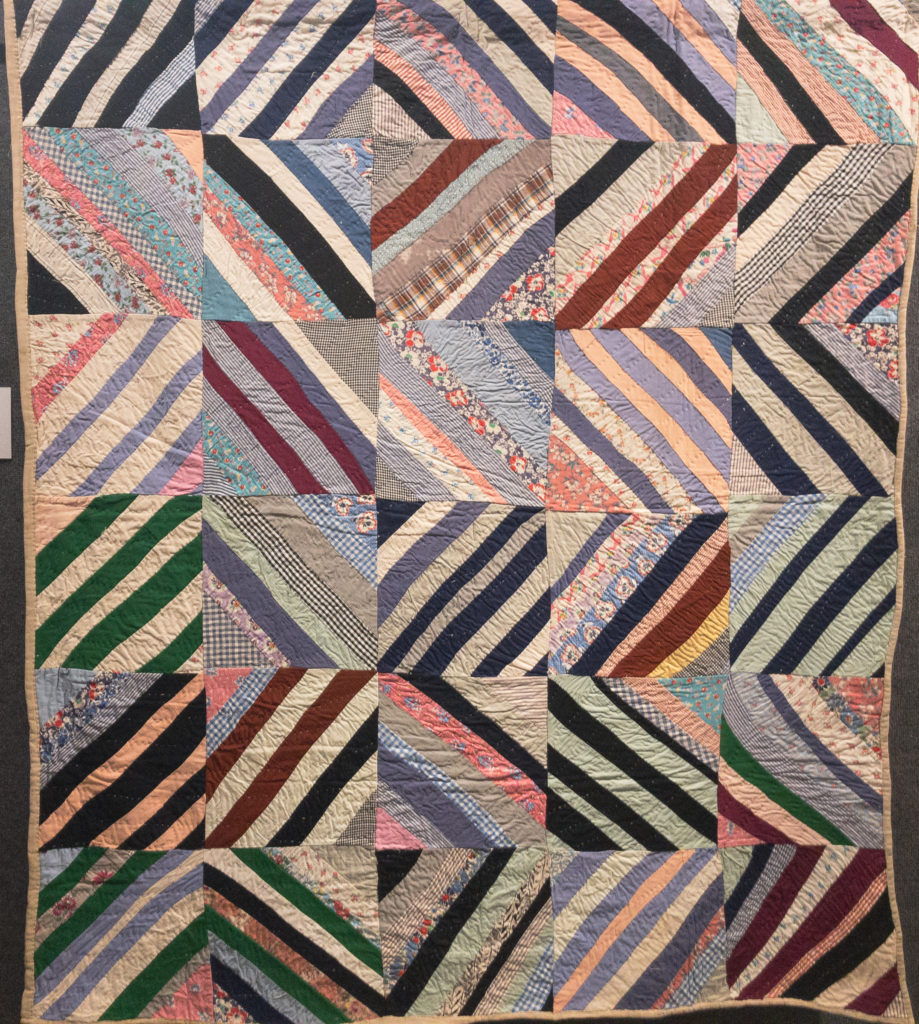
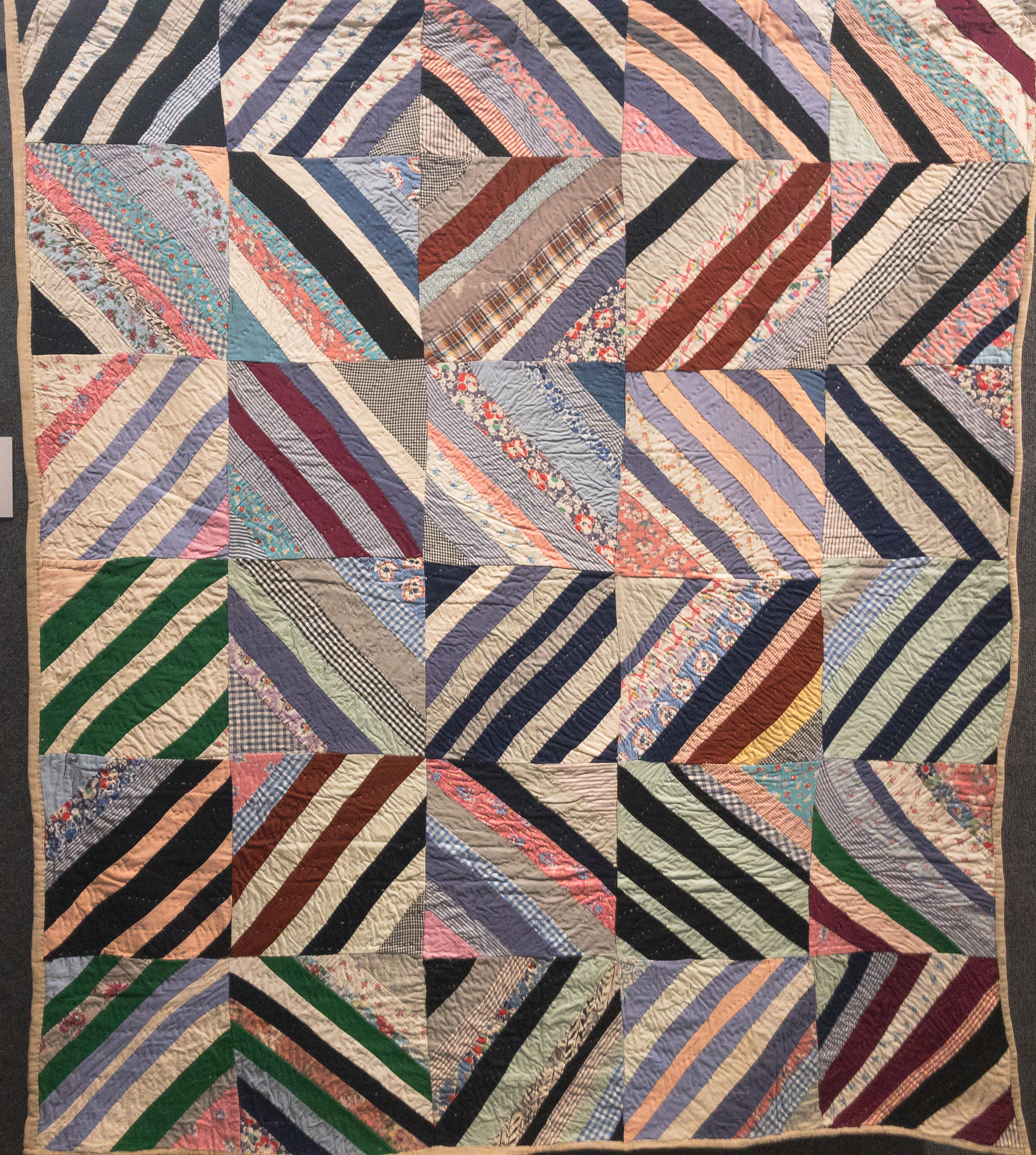
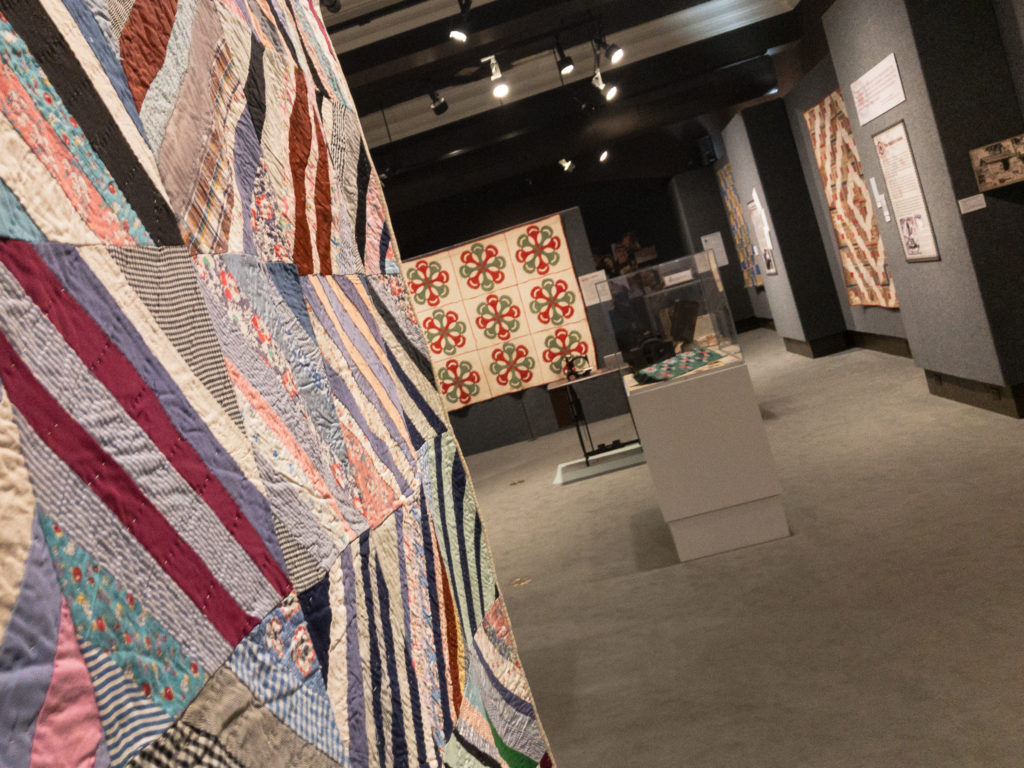
String Quilt
Anna Byrd (1910-unk.)
Spartanburg, SC. ca. 1930
Anna was born in Fairfield County, SC. She married James Byrd in 1925 and they had six children. The donor of this quilt was their oldest son, John W. Byrd. The African American maker of this quilt was especially skilled at juxtaposing light and dark fabric “strings” to great visual effect, which she quilted in long running stitches, with no definite design. (McKissick Museum Collection 2012.05.01)
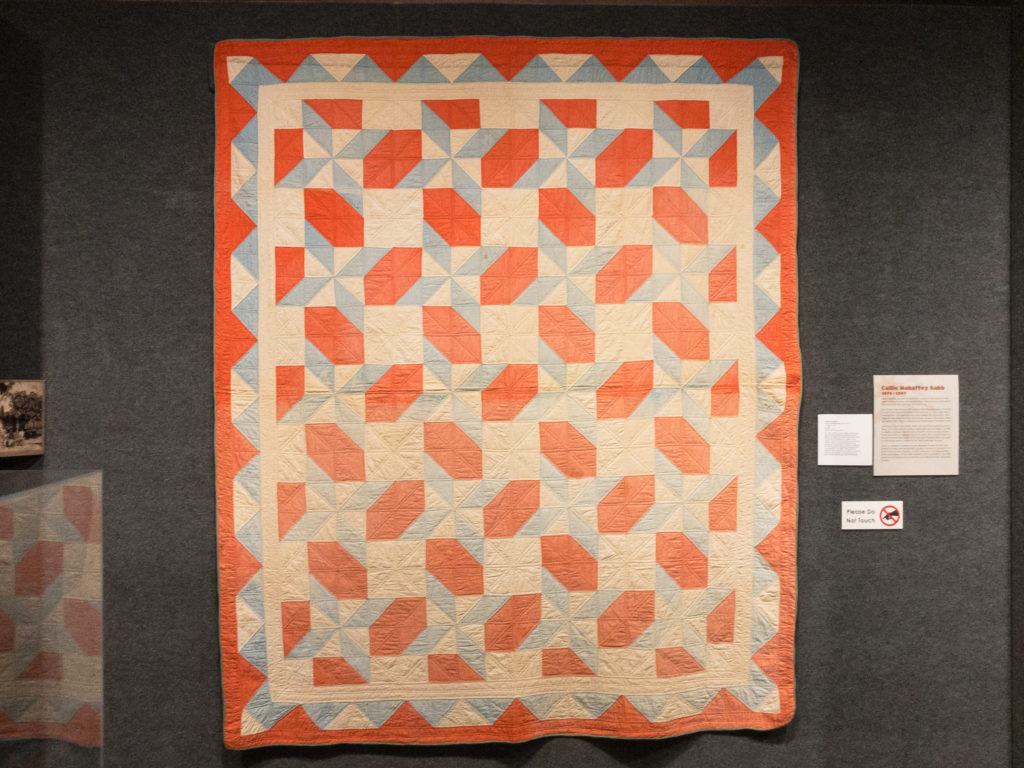
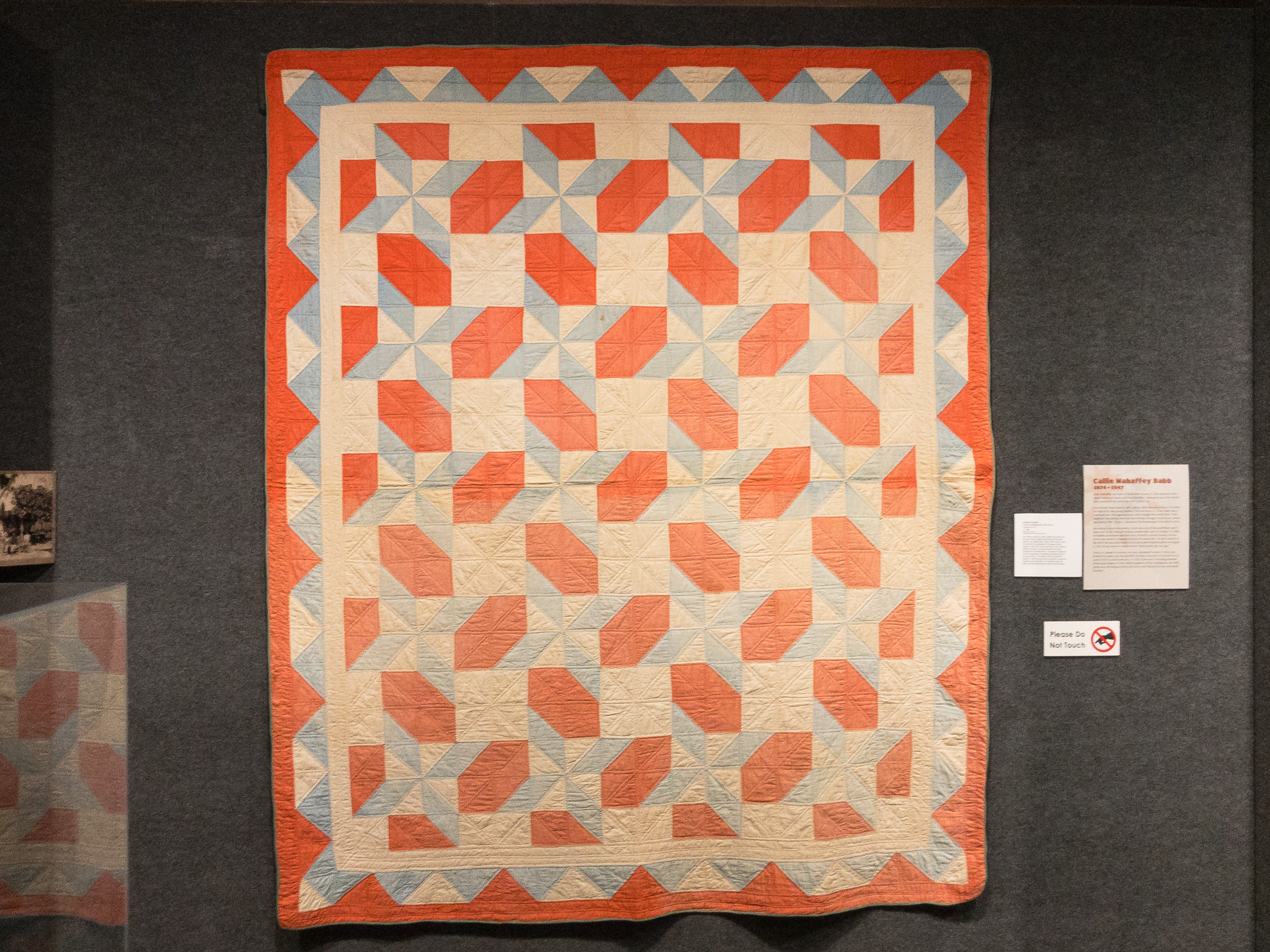
Pinwheel Variation
Caroline Mahaffey Babb (1874-1947)
Fountain Inn, SC. ca. 1900
Gift of Gloria Burnside
Red, white and blue 3-patch design with distinctive sawtooth border. Neatly hand-stitched Pinwheel pattern, also called Clay’s Choice. When Nancy Cabot introduced this quilt pattern to Chicago Tribune readers in April 1933, she noted Henry Clay’s efforts in 1850 to introduce a compromise bill that would forestall the Civil War. (McKissick Museum Collection 2012.05.01)
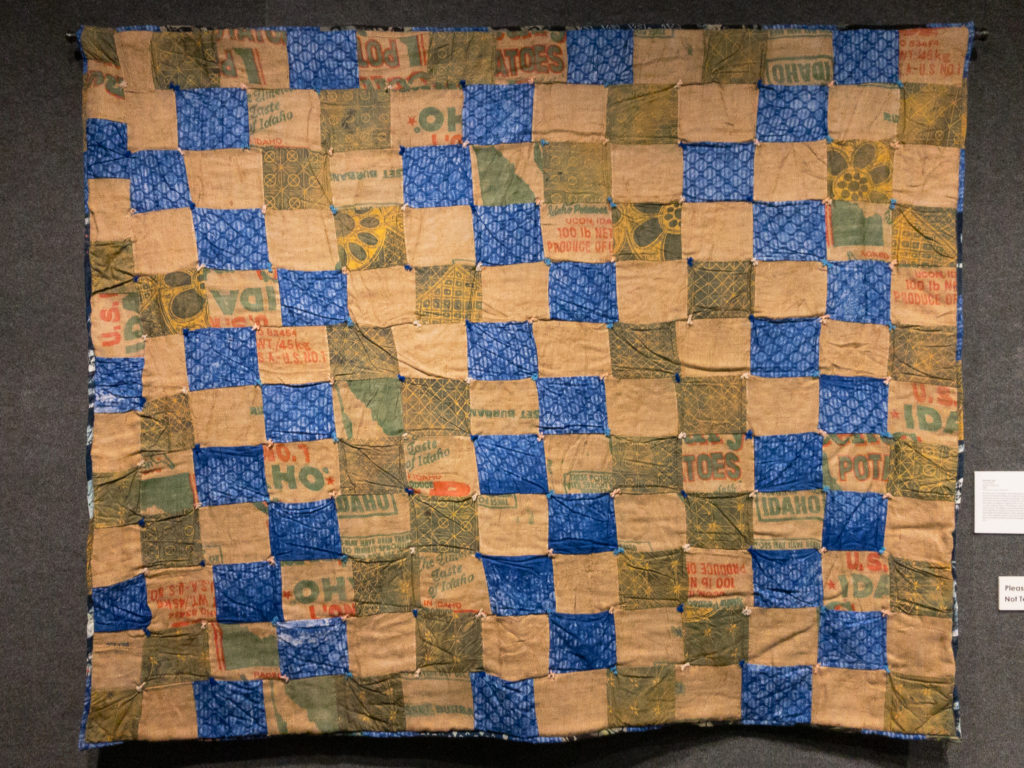
Rectangle Quilt
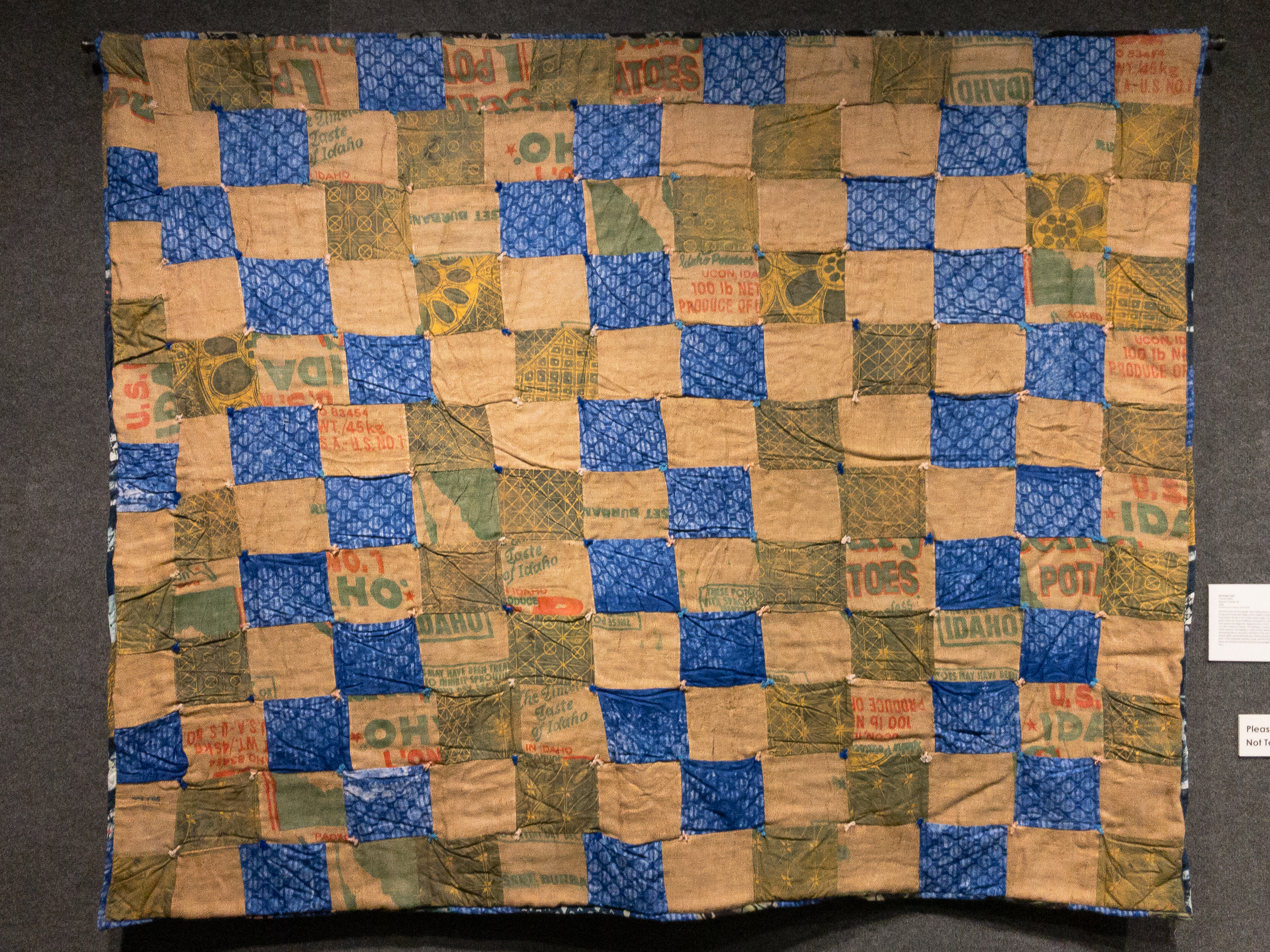
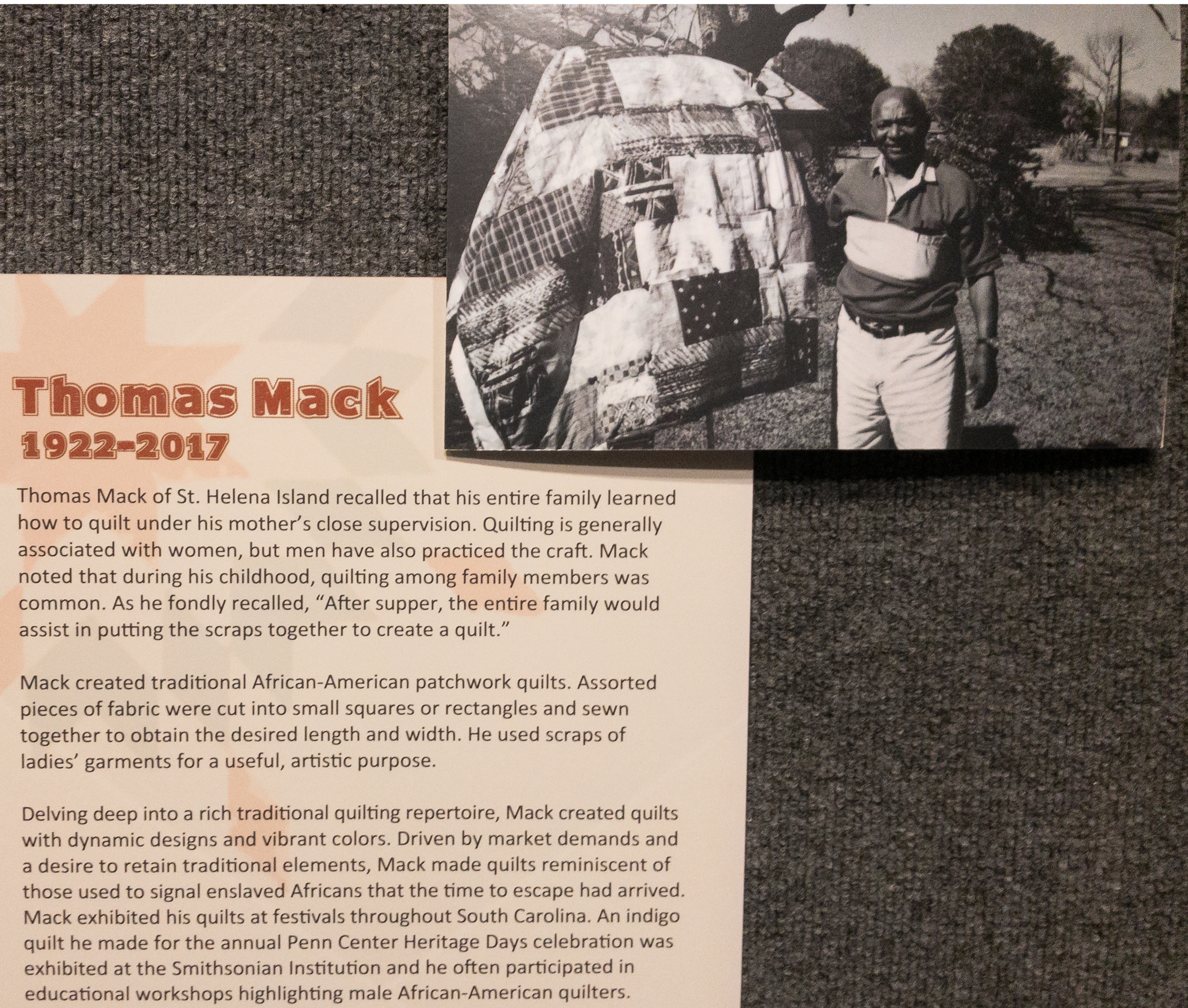
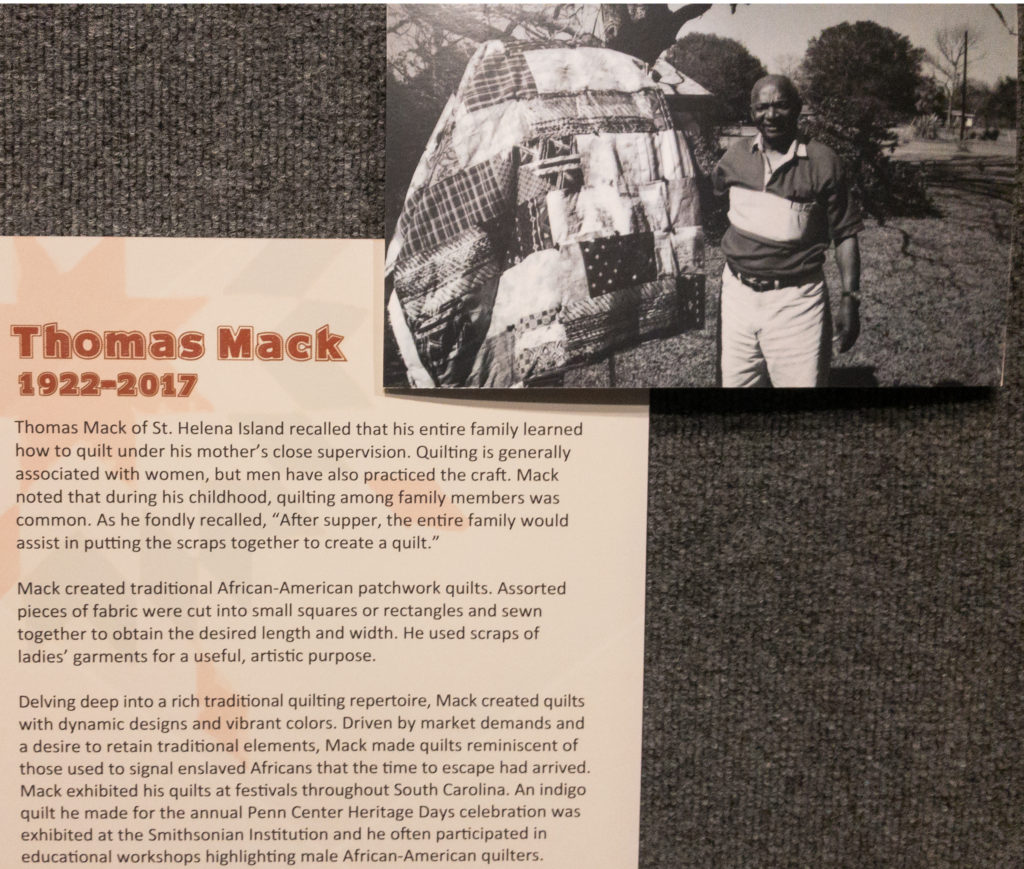
Thomas Mack, Beaufort County, SC. 1999
Machine-sewn of rectangular, alternating pieces of burlap and handmade indigo prints made by Arianne King Comer. Burlap is from Idaho potato bags. (McKissick Museum Collection 1999.23.11.01)
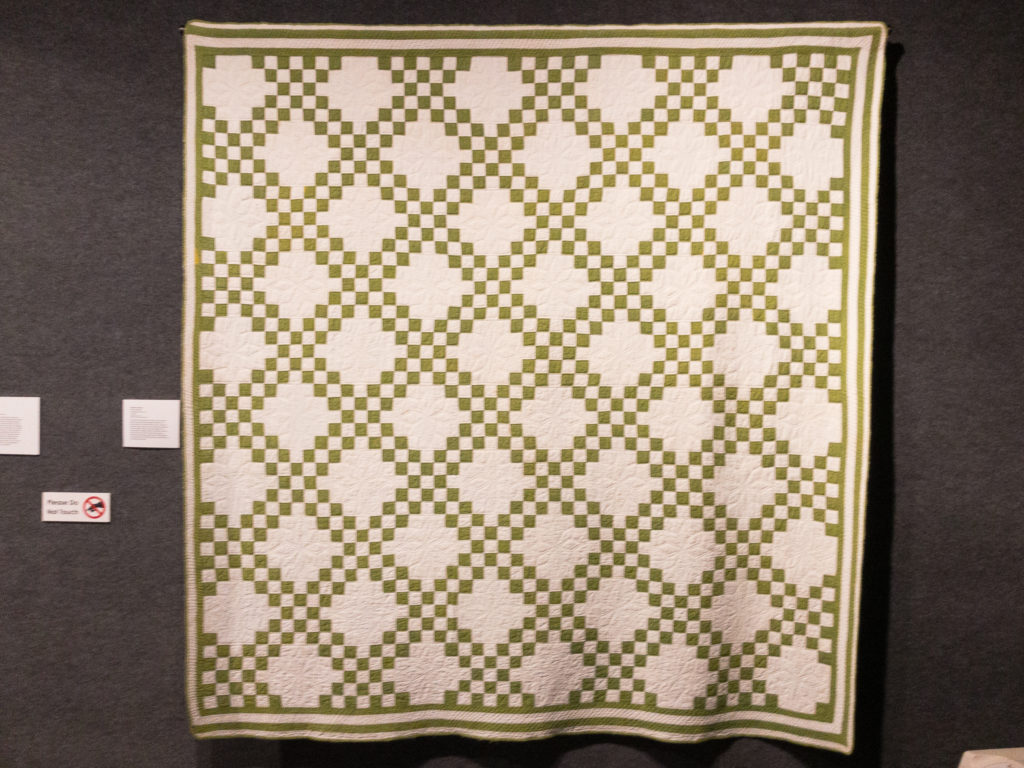
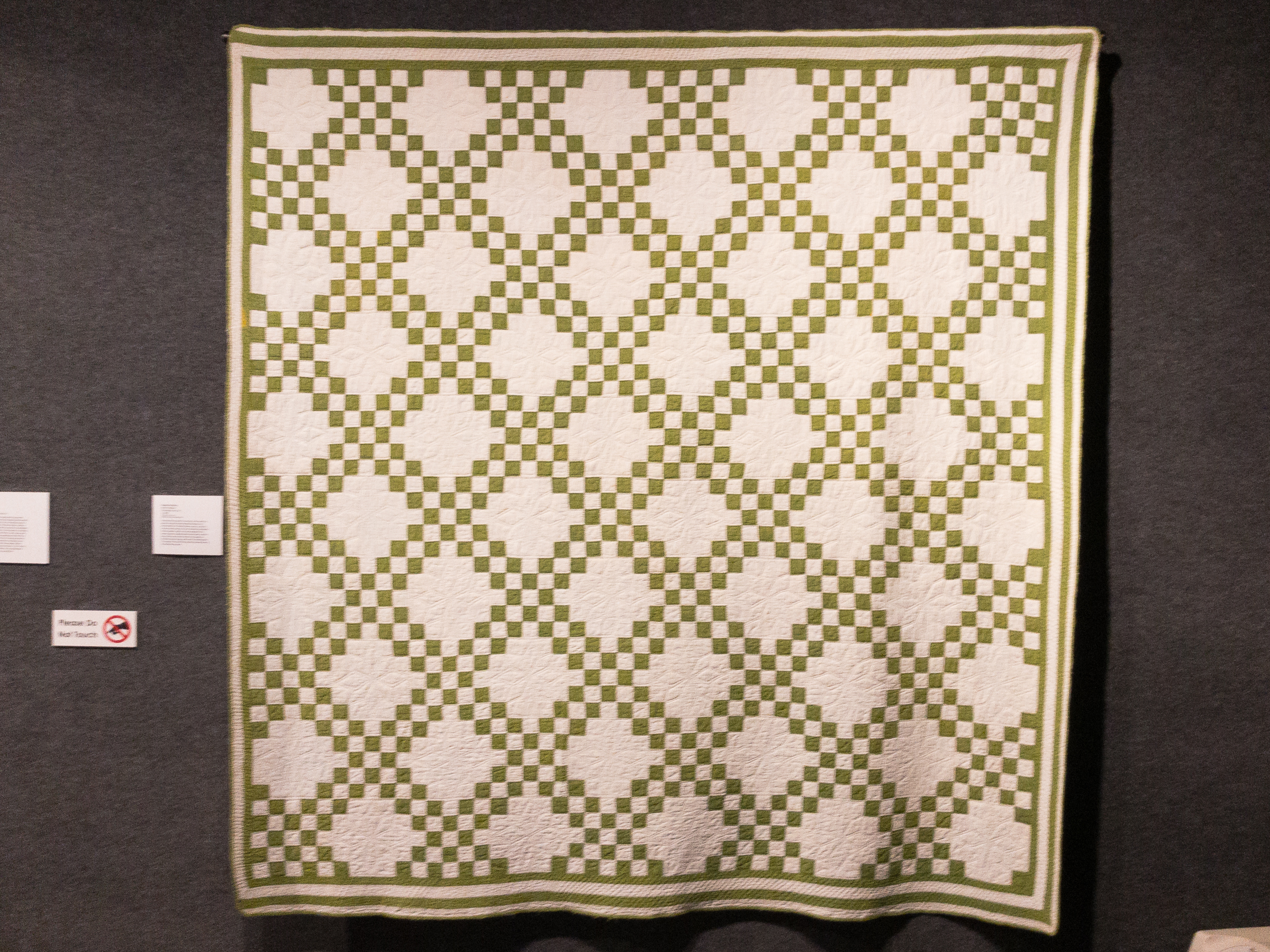
Double Irish Chain
Maker Unknown, Chattooga County, Georgia, ca. 1880
Gift of Sarah M. Norton
McKissick Museum Collection 6.1804
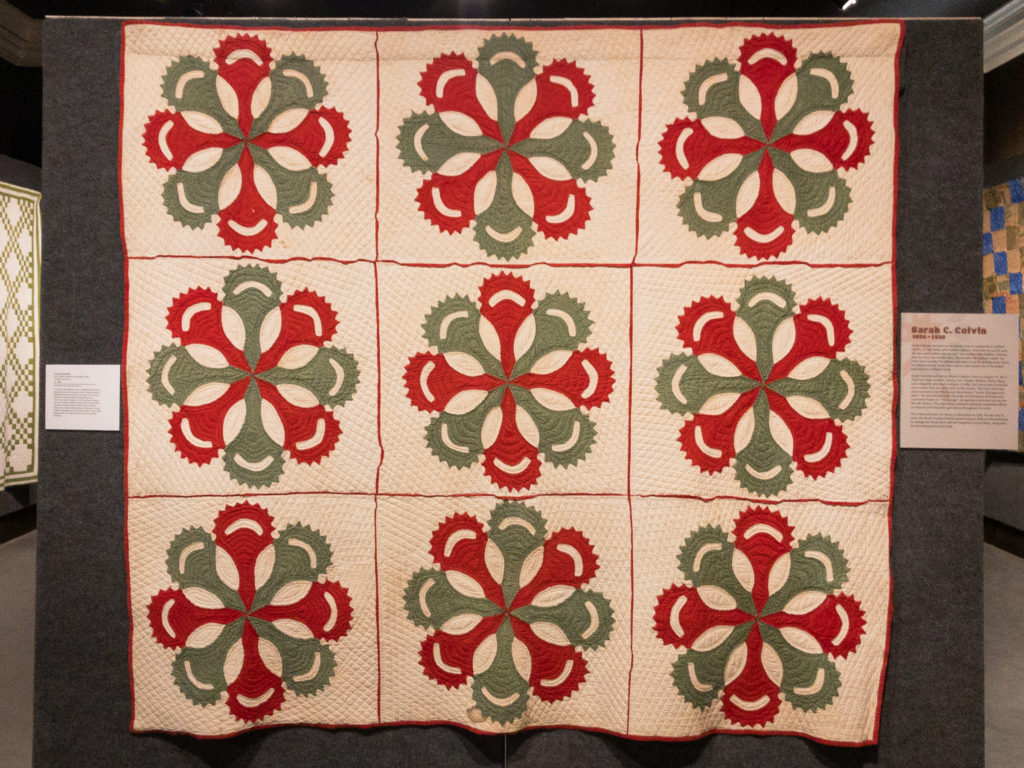
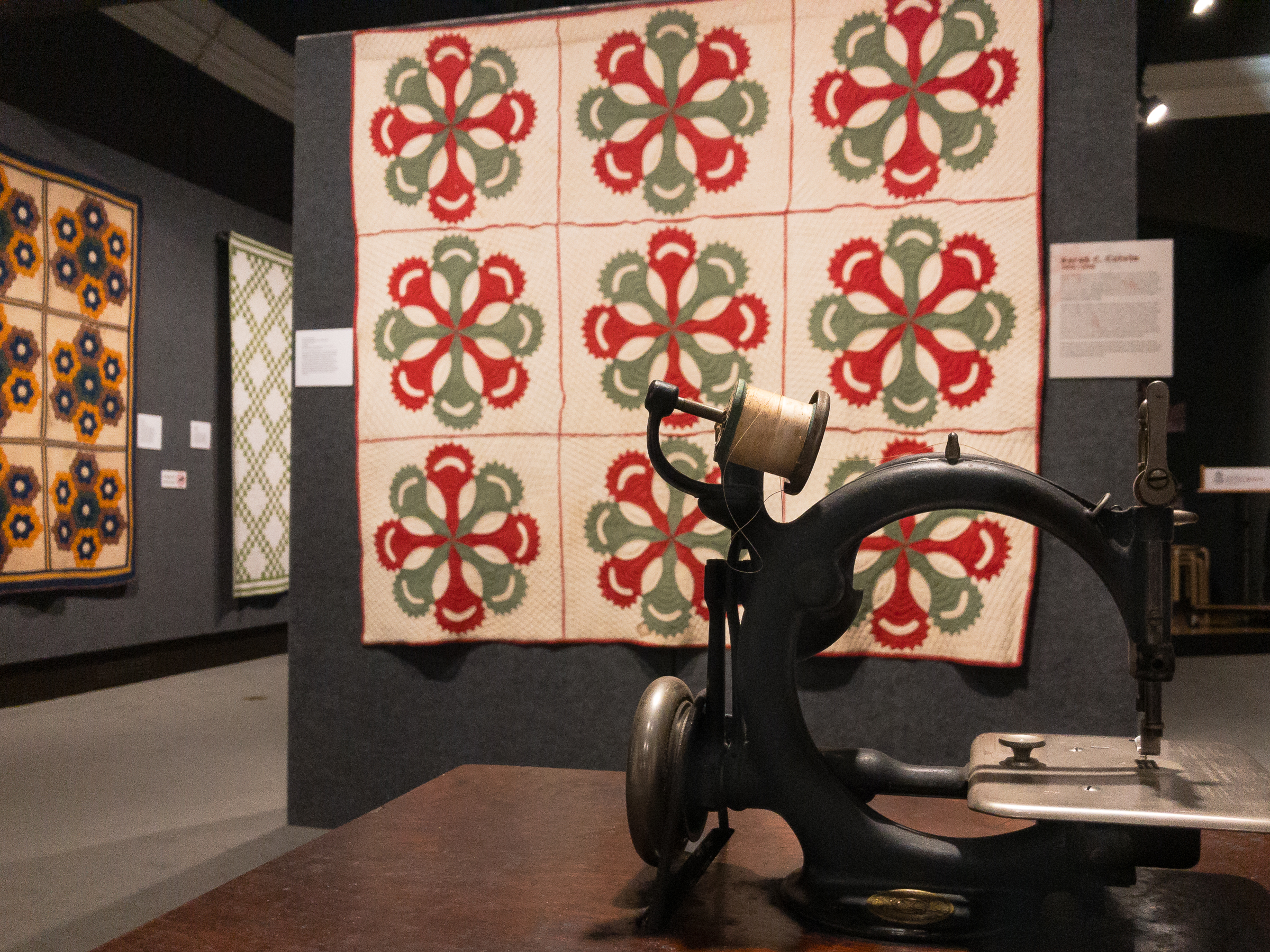
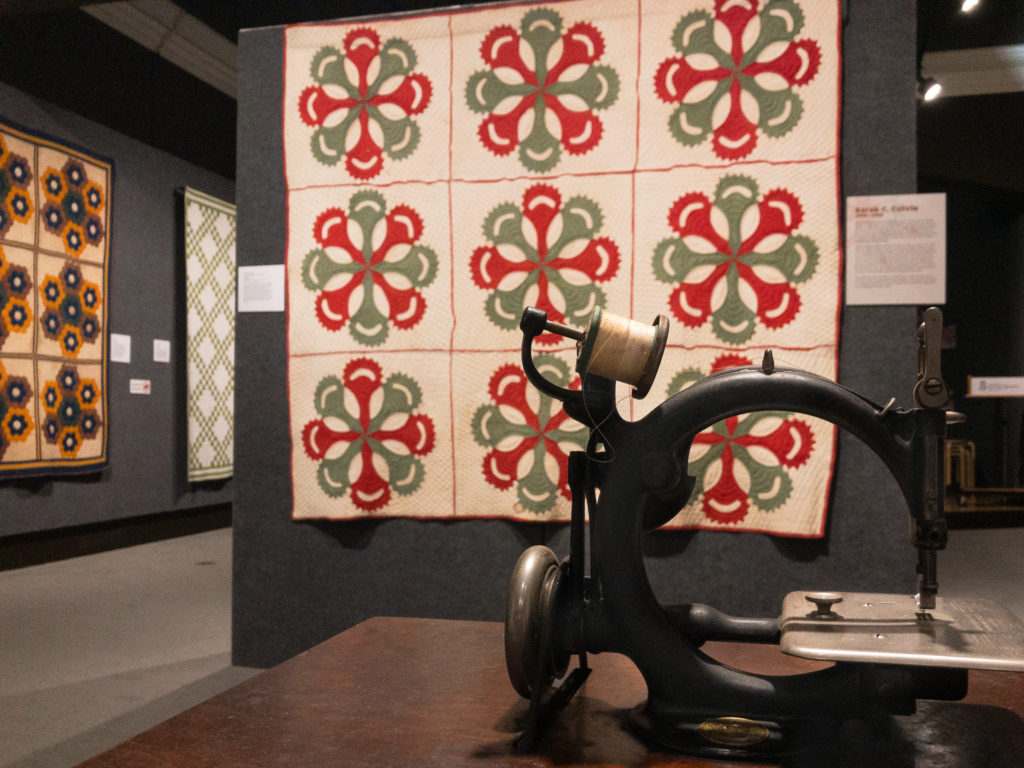
Coxcomb Variation
Sarah Edith Coleman Colvin (1856-1930)
Fairfield County, SC. ca. 1880
Gift of Edith E. Adams in memory of Mary Colvin Adams and Eva Colvin
In what at first appears to be a traditional block-style, appliquéd, two-colored quilt, Colvin instead appliquéd the hand-pieced “coxcombs” onto muslin and then machine-quilted the background in a crisscross, diamond pattern. (McKissick Museum Collection 2001-03-138-02)
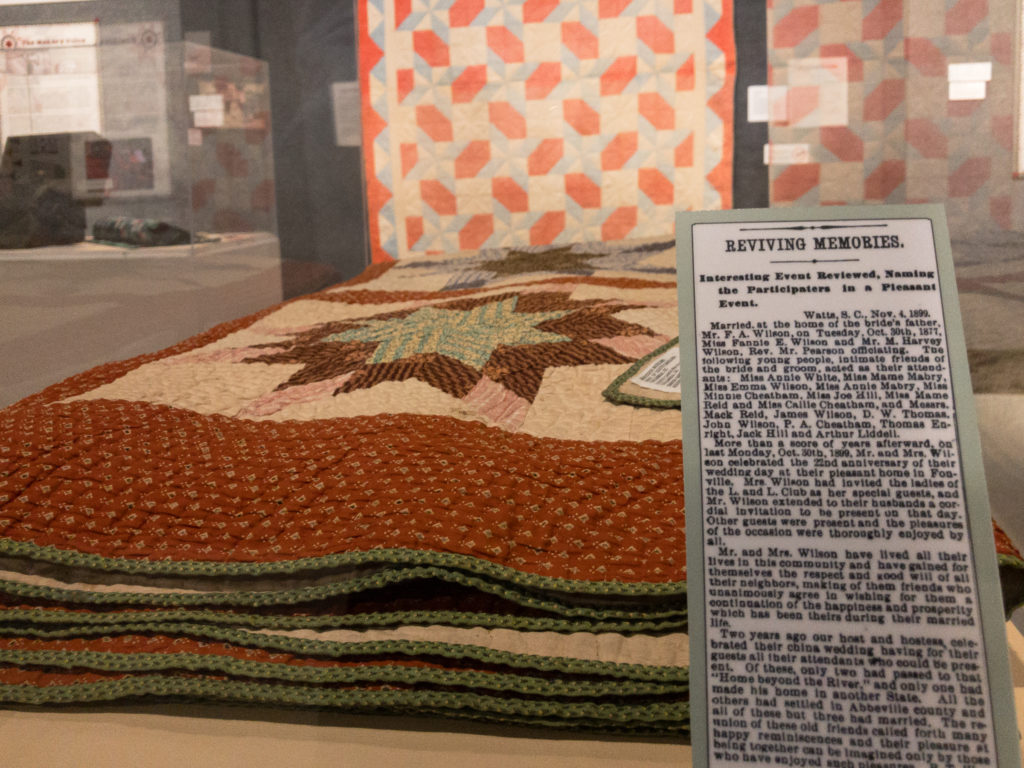
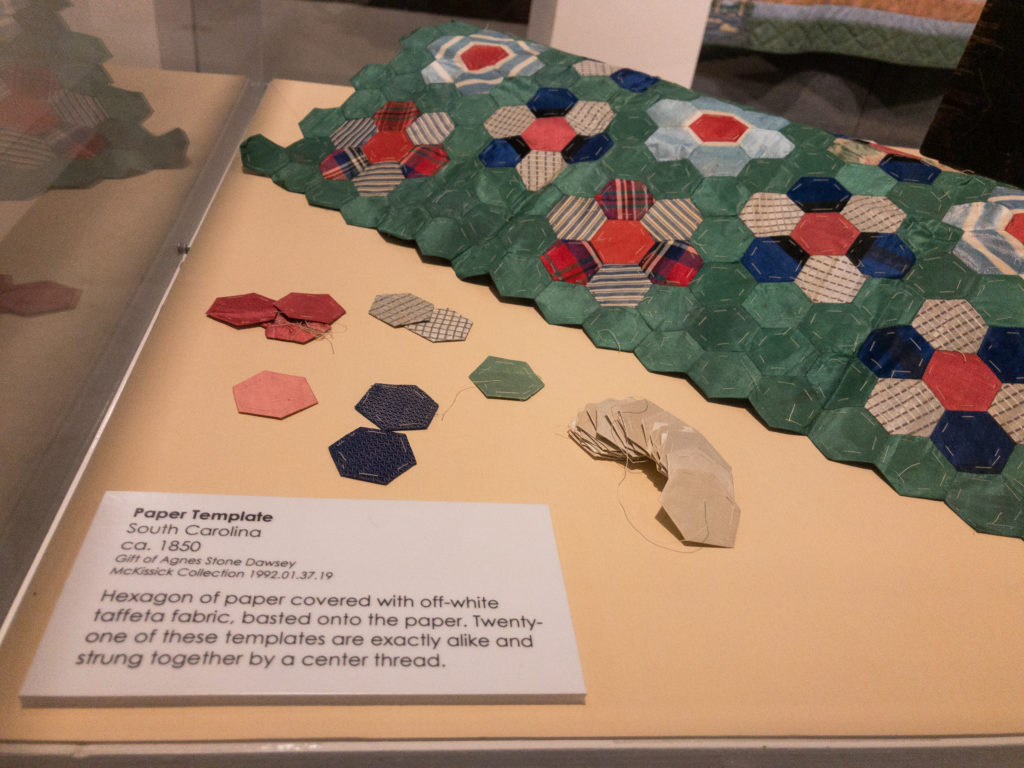
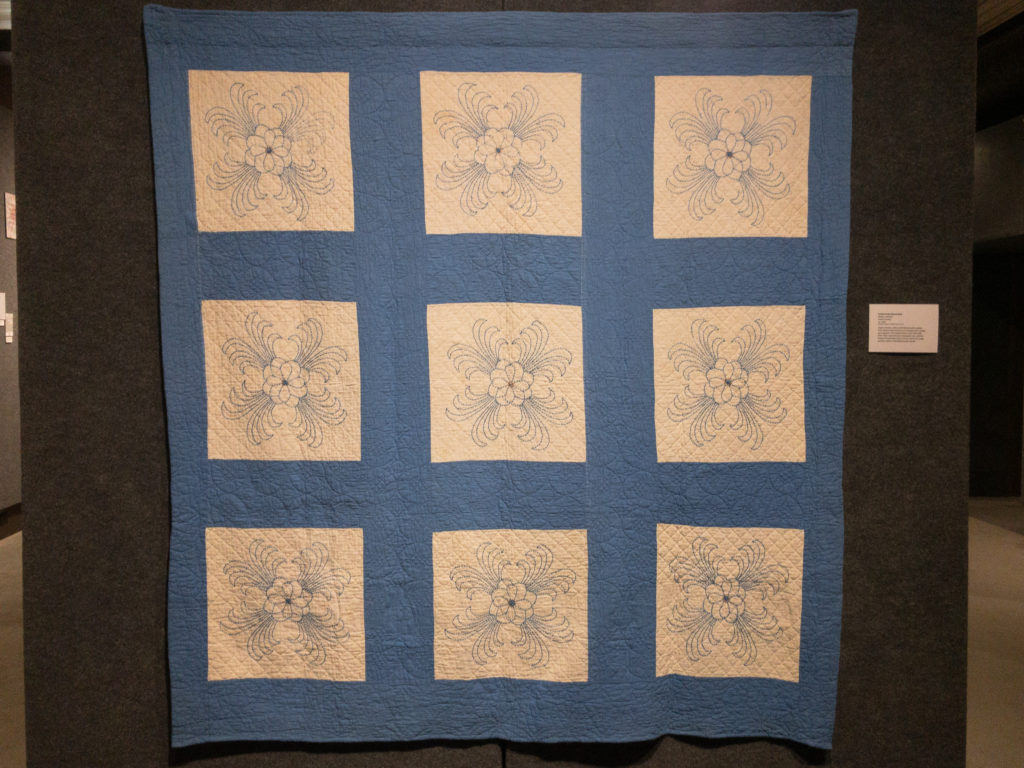
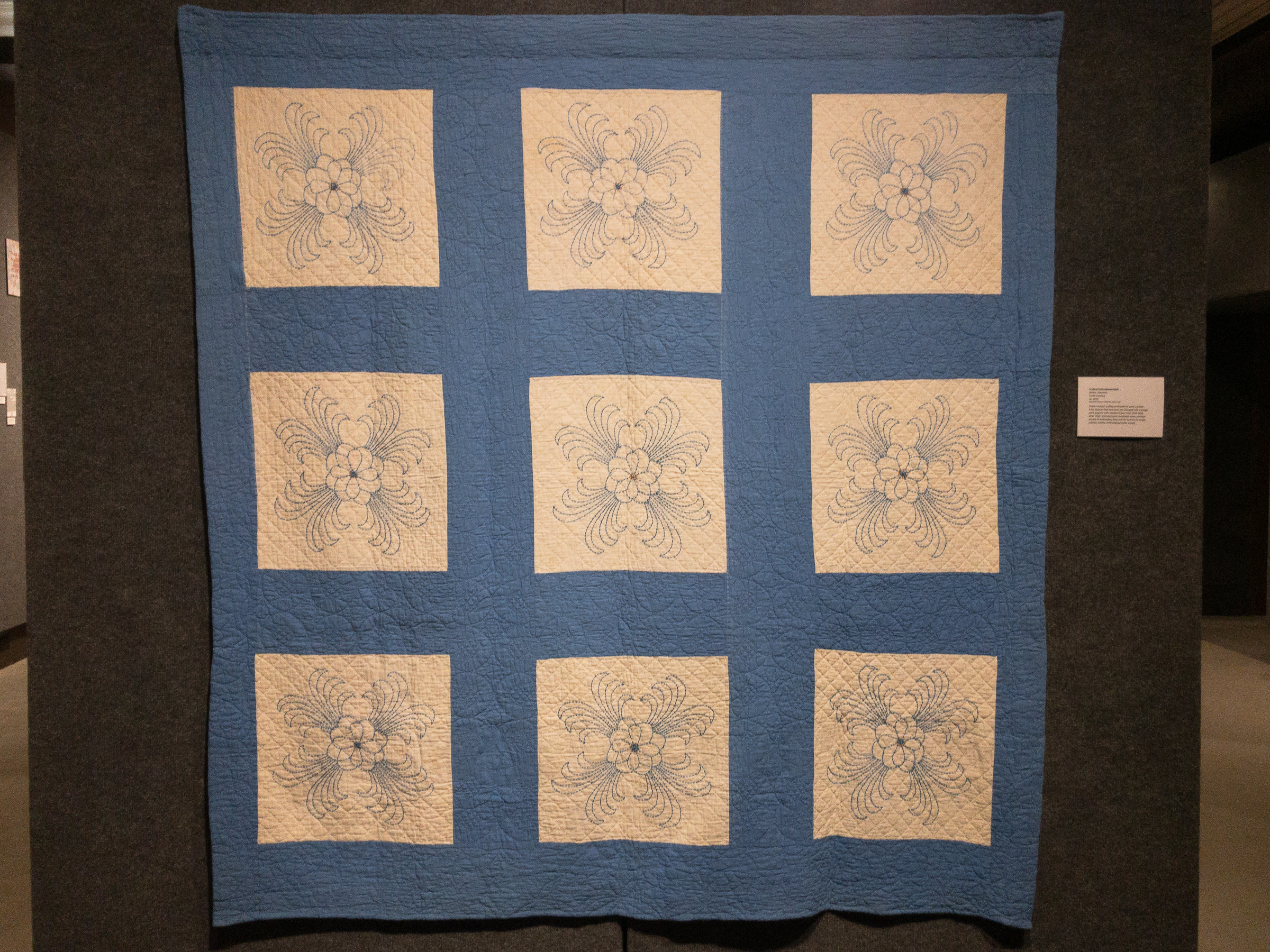
Outline Embroidered Quilt
Maker Unknown
South Carolina, ca. 1910
Single-colored, outline-embroidered quilts created from square that had been pre-stamped with a design were popular with needleworkers from 1910-1930. (McKissick Museum Collection 2013.11.100)
It’s been nearly twenty years since I last went to the State Fair, but yesterday Mr. Dowell and I braved the crowds to see some sights. Of course, I was really there for the quilts, and they did not disappoint! I loved the broad spectrum of quilting styles represented—everything from Yo-Yo quilts and Cathedral Windows to quilts with modern curves, appliqued tulips, and pixalated Dachshunds.
Did I eat any fried candy bars while at the fair? No, I did not, as tempting as they might have been. I did spend an inordinate amount of time gazing at the canned foods (they were in beautifully-lit display cases; it was like standing in front of a jewelry store window) and searching for the pies, which I never found (where were the pies?!). There was a special exhibit of very fancy cakes, and the line to see them was longer than the line for the fried dough and the fried Snickers combined.
[envira-gallery id=”1178″]
I’m so happy to have a new Friendship Album story to share with you! While determining what might happen next with my novel, Friendship Album, 1933–right now I’m in the process of reaching out to agents–I thought I’d work on some stories about our favorite quilters from Milton Falls.
In today’s story, we meet 18-year-old Eula Rhodes, a young woman widely regarded as one of the best quilters and cooks in her small farming community of Homerville, Ohio. While some wonder when Eula will marry, Eula wonders who would be interested—and she’s not sure if she cares. Life at home with her rambunctious brothers, fun-loving sisters and her understanding mother is comfortable and comforting. But when she meets Dan Baker, a farmer with an eye for quilts, she begins to wonder if she might be ready to make a home of her own.
If you want to keep up with the latest from the Quiltfiction podcast, please sign up for our newsletter! I’ll be sure to let you know what’s happening with Friendship Album, 1933, and my other quilt fiction endeavors.
In Episode 39, Emmeline is in for a big surprise at the quilt show.

St. Louis, Missouri. Cote Brilliants School, 1918. Library of Congress: https://www.loc.gov/item/2017674670/.
And here we are, at the end of the novel! Can you believe it? The first episode of Friendship Album, 1933, aired on June 6th of 2018. Now, eleven months later, we close the book. I hope you’ve enjoyed it!
Plans are in the works to continue with the podcast after a short hiatus and to eventually have a sequel to Friendship Album, 1933. We haven’t set firm dates yet, but I’ll let you know when I have it all figured out! To stay updated, sign up for my newsletter using the form on the right, or at this link: Join the Quilt Fiction Community!
In the meantime, thanks for listening! If you’ve enjoyed the podcast, I hope you’ll consider telling your friends as well as leaving a 5-star rating and a nice review on iTunes. I’ve had so much fun writing and reading this novel, and I’m happy that you’ve joined me as we’ve followed the adventures of our girls in Milton Falls! See you soon, I hope!
In Episode 38, Dorothy recalls a revealing conversation with Emmeline as she gets ready for guests.
My dears, this is the second to last episode of Friendship Album, 1933! It’s hard to believe we’ve almost reached the end.
This week, we spend time with Dorothy as she gets ready for the Wednesday Bee. Dorothy’s had a remarkable year in many ways. Her daughter left home unexpectedly (and left her children behind), her husband had a heart attack, and all year long she’s had to deal with the infuriating Emmeline Grangerfield.
In this episode, Dorothy opens herself up to others in an act of true hospitality. At first, I wasn’t so sure that Dorothy would ever change her mind about Milton Falls’ most renowned quilter. Dorothy can be self-protective, which I don’t blame her for one bit, but sometimes self protective people stay stuck where they are. Somehow Dorothy has managed to be truly gracious to Emmeline, and I think that’s helped Emmeline to grow as a person. I think Dorothy has grown, too–we see that in her generosity toward Emmeline, and her willingness to forgive.
I do plan to go on with this story, and I’m enjoying imagining my characters’ futures without actually having to do the hard work of writing everything down! Given Dorothy’s drama-filled year, it’s interesting to think about what will happen next in her life. I hope things will calm down a little bit for her, don’t you?

Dorothy’s Crown of Thorns quilt.
Spoiler Alert: If you’re not caught up with the podcast, this post contains recent plot developments. Beware!
Welcome to the missing Florence chapter!

Farm Security Administration – Office of War Information Photograph Collection (Library of Congress)
I’ve gotten a lot of amazing feedback since Friendship Album, 1933‘s beginning–lots of nice compliments and encouragement. However, when listeners learned in Episode 34 that Florence was engaged, I got a lot of complaints, most of which fell into one of two categories (and sometimes both): 1) How could you not show us Florence’s engagement? and 2) Did I miss something? I think I missed something!
I’m not sure this would be such a big problem if the podcast listeners were readers instead. Readers could flip to the next Florence chapter (the one you’ll be listening to Episode 37) and see that I do in fact show the engagement scene. In fact, you get two engagement scenes–the first one and the second one!
I’ll be honest — when I revise this novel (you know that it’s a first draft, right?), I’ll probably bring in Arthur’s proposal earlier, just so no one is confused. But for now, I hope you’re glad that the big day has finally arrived, and you get to witness every second!

In Episode 36, the Wednesday morning bee’s membership increases, and Bess wonders if it’s time for a new beginning.
We’re getting very close to the end here … or at least the end of the first book in what I hope will be a series. As is the case with many endings, new beginnings are on the horizon, and I think this is especially true for Bess. She has grieved her husband, Bill, long and well. But I think she’s finally gotten to a place of acceptance — Bill really isn’t coming back. Bess has always known this, but you can know something rationally and not really believe it deep down.
In some way, Bess’s story in Friendship Album, 1933, is about secondary losses. She’s not only lost her husband, but she’s lost financial security, her identity as a wife, and the dreams she and Bill shared about their future after Bill retired. Slowly but surely over the course of the story Bess has dealt with most of these issues, but I think the hardest one is the loss of her identity as Bill’s wife. Her friendships with Dorothy and Joe have helped her a lot with this, but interestingly, it’s Edwina and Emmeline who get her over the final hump.
We all get by with a little help from our friends, don’t we?