Notes: Friendship Album, 1933: Episode 29

In episode 29, Emmeline travels to her hometown to meet her quilting idol.

Emporia has changed since Emmeline was a child–it was a town that did a lot of growing in the ’20s and ’30s–and Emmeline has changed a lot, too. But you know what they say–you can take the girl out of Emporia, but you can’t take Emporia out of the girl. (Okay, they don’t actually say that, but it’s fun to pretend they do!)

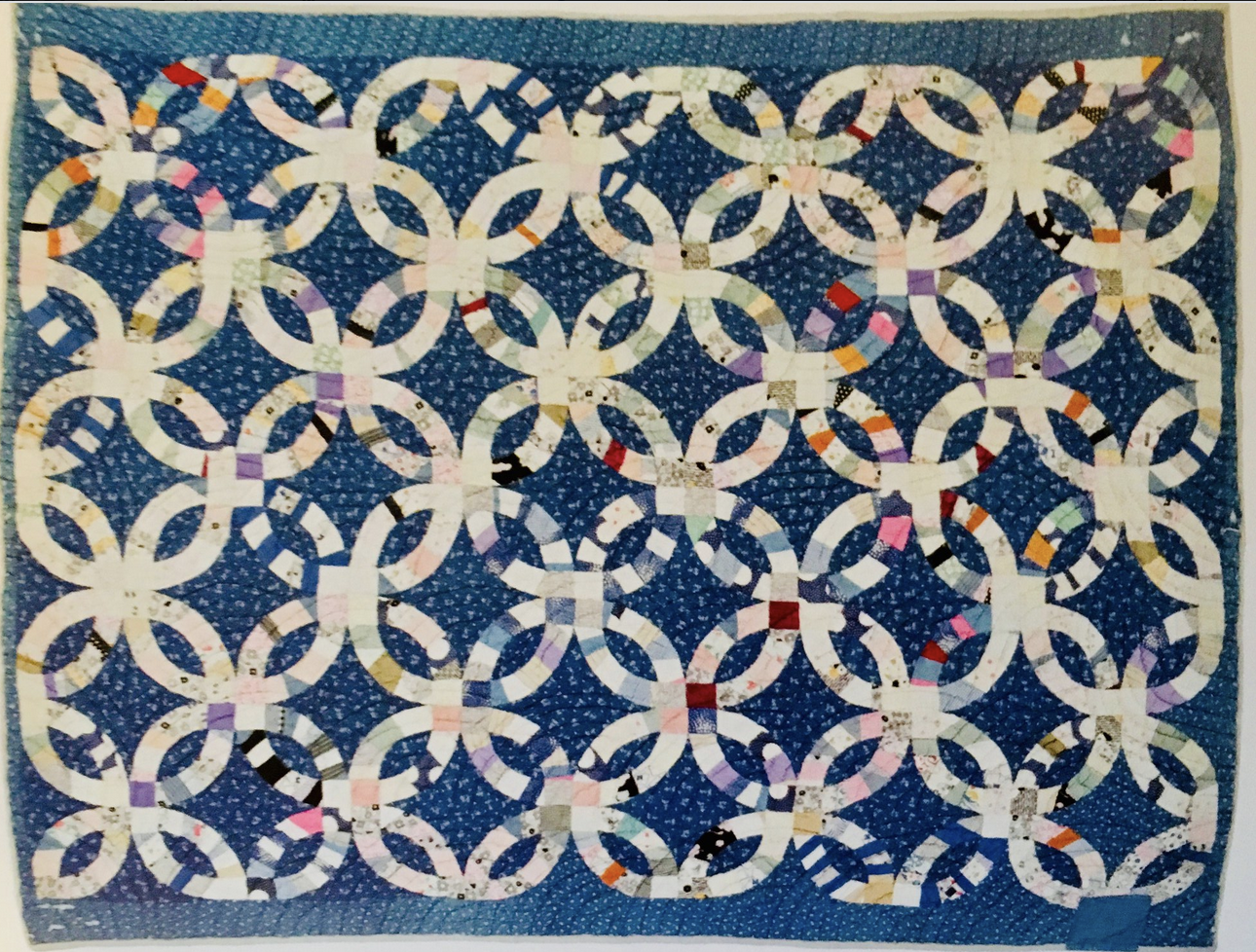
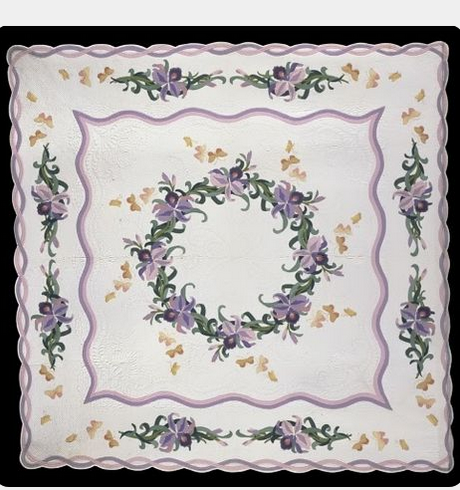
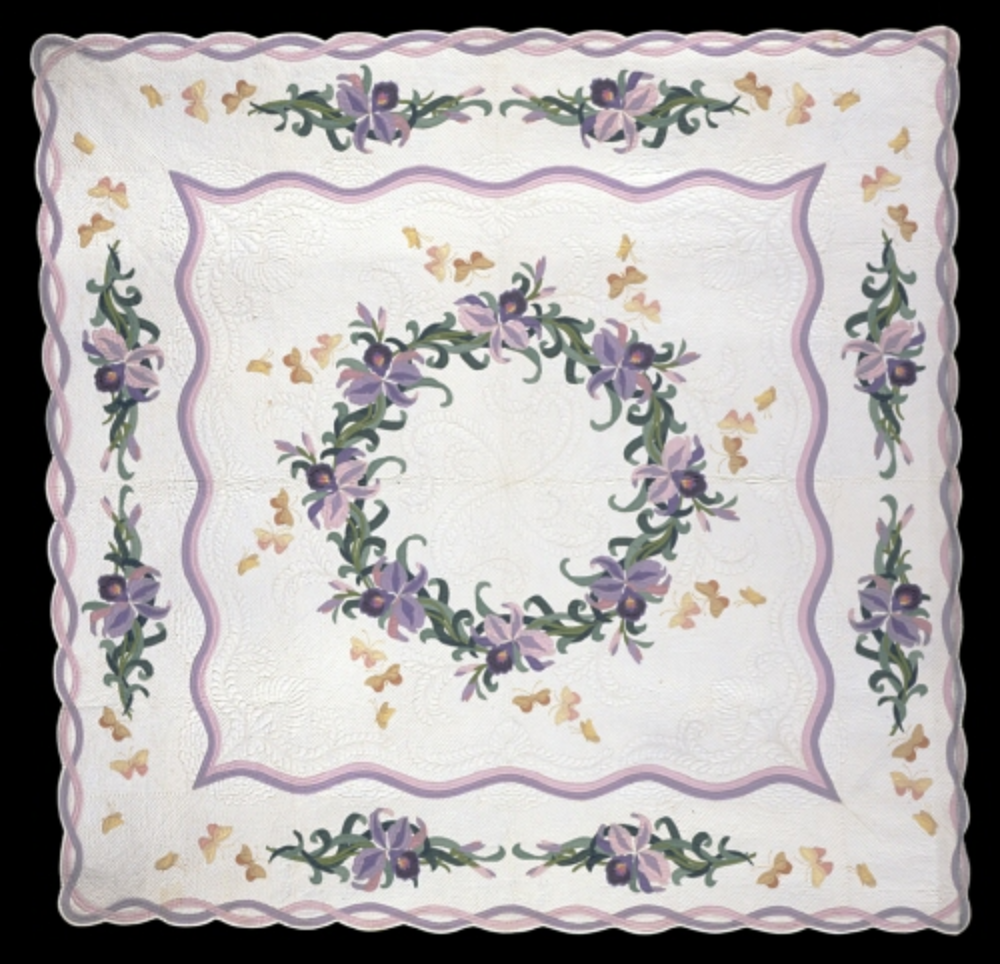
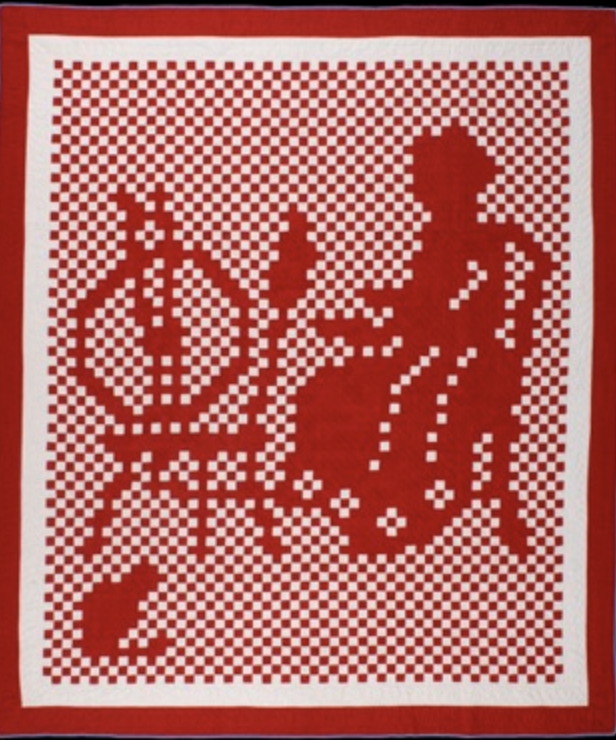
Emmeline is in Emporia to meet her quilting idol, Rose Kretsinger. Kretsinger was a highly regarded quilter in her time, creating some of the most beautiful quilts of the early 20th century. For an in depth look at Kretsinger’s life and work, I highly recommend “The Aesthetic Life: The Story of Quiltmaker Rose Kretsinger” by Jonathan Gregory, a video of a lecture given at the International Quilt Study Center.

Orchid Wreath by Rose Kretsinger

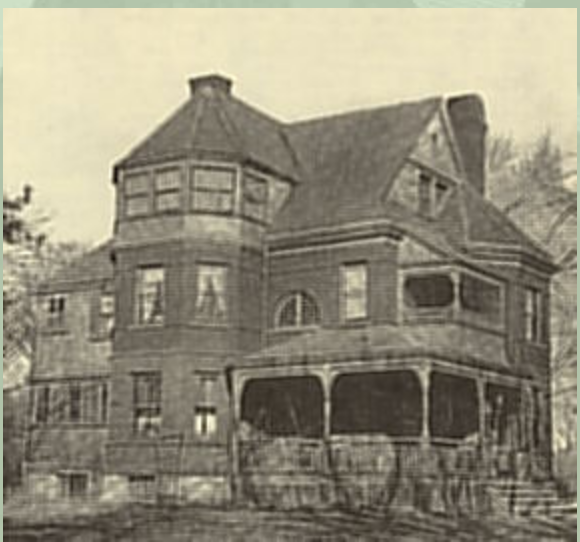
It’s Emmeline’s hope to meet with famous newsman William Allen White while she’s in Emporia. White is famous for calling Emporia the Athens of Kansas. He’s best known for being a Pulitizer prize-winning editorial writer. Here’s his house in the early 20th century:

I always love to write an Emmeline chapter, because I’m never sure what Emmeline is going to do. I hope you enjoy spending time with her in her old hometown!


View Post

Wednesday Bee Minutes

Over on Facebook, we’re having a lot of fun in the Quiltfiction Club, Quiltfiction’s closed group (which I encourage you to join!). On Wednesdays we have a virtual bee, where we all chat and share recipes and quilt pictures, and everyone is invited to participate in a themed show and tell. We’ve shared pictures of our vintage sewing machines, pin cushions, and most recently sewing boxes and baskets.

Several weeks ago, one of our members, Marie, offered to write up the minutes of our weekly meetings. Much to our delight, she did so in character, writing an overview of each bee as though she were Emma Grangerfield’s granddaughter, Emma, owner of a quilt shop in Milton Falls. With Marie’s permission, I’ve decided to share her weekly column here. Enjoy!

From:  “Quilt Along With Emma G,” an online offering at miltonfallsgazette.com

Greetings!

I am sad to report that earlier this week a good friend of mine and fellow quilter succumbed to the scourge known as breast cancer.  In Ms. Mae’s memory, I strongly urge all of my readers to keep up with regular checkups.  If something doesn’t look or feel right please don’t hesitate and see your doctor right away.

What a whirlwind of a week here in Milton Falls!  The Milton Falls Quilting Company shop was busier than usual this week as quilters from all around stocked up on fabric, kits, patterns, and notions to keep them busy during the Superbowl.  I love a busy week as it is not only good for business, but it is also balm for my mind and soul. 

Also, I do have to apologize to you dear readers for the lateness of this article.  Computers and power outages just simply do not mix!

This week the Quiltfiction Club met at the home of club president Frances.  What a warm, inviting, cozy place to share and sew!   Several new members have joined the ranks in recent days and the club is so happy to have them.

This week’s show and tell featured vintage sewing baskets.  One of the most interesting sewing boxes was shown by Kelly.  The box belonged to her husband’s step-grandmother who is of Japanese descent.  The box was originally designed for crafting kimono’s and had special slots for necessary items.  Several other baskets and very interesting vintage notions were shared and enjoyed by all members. 

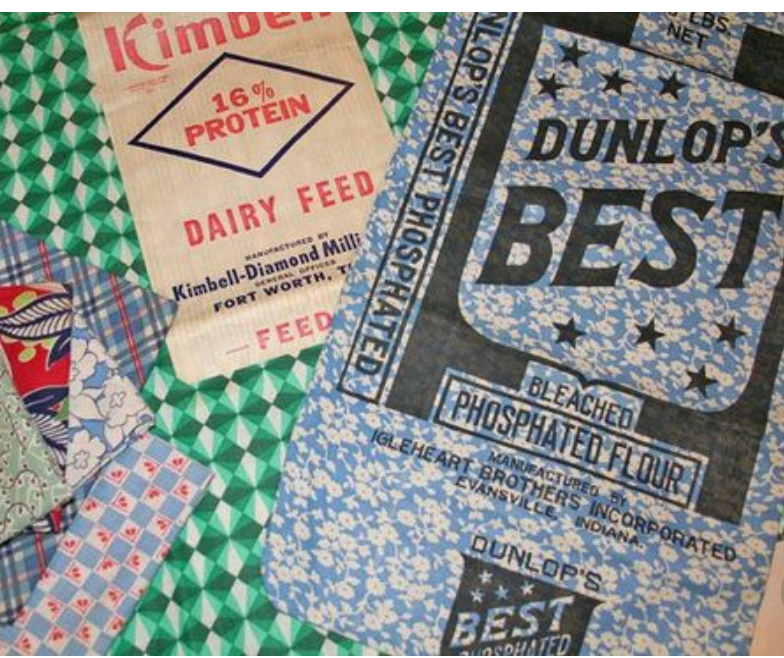
Susan shared a beautiful nine-patch quilt that was given to her grandmother in 1936 as a wedding gift.  The quilt was lovingly crafted out of feed sacks.  During that time period, feed mills started using floral print material for their feed sacks as they knew frugal homemakers used them for clothing, bedding, and other necessities during a bleak time in history.


After the show and tell, Nonnie shared an article that posed the question, is it still important to teach children to sew?  The resounding answer from the group was a hearty YES.  It is important that children learn basic skills and sewing is one of them.  If you have children that want to learn sewing skills there are great organizations such as 4-H and civic groups that offer tutorials.   

This week’s recipe is sure to keep your families warm on what seems to be endless winter evenings.  Also, trust me; a slow cooker is a quilter’s best friend!

Slow Cooker Chicken & Biscuits

2 boneless skinless chicken breast halves, cut into 1 inch cubes

2 cups of broccoli florets

2 carrots diced

2 cans cream of chicken soup, undiluted

1 tube of large biscuits, grands style

Salt and pepper to taste

In a large slow cooker, mix raw chicken, broccoli florets, carrots, cream of chicken soup, salt and pepper.  Cook on high for 3 hours.  After 3 hours, stir the chicken and vegetable mixture.  Open the tube of biscuits and tear the dough into small pieces and place on top of the chicken and vegetable mixture.  Cover and cook for 1 more hour then serve.

Frances motioned for adjournment and reminded all to post their Quilt History Thursday items to the group Facebook page. 

Until next week, keep stitching!

 

Notes: Friendship Album, 1933: Episode 28

Dorothy, worried about what the future holds for her family, opens the door to an unexpected visitor.

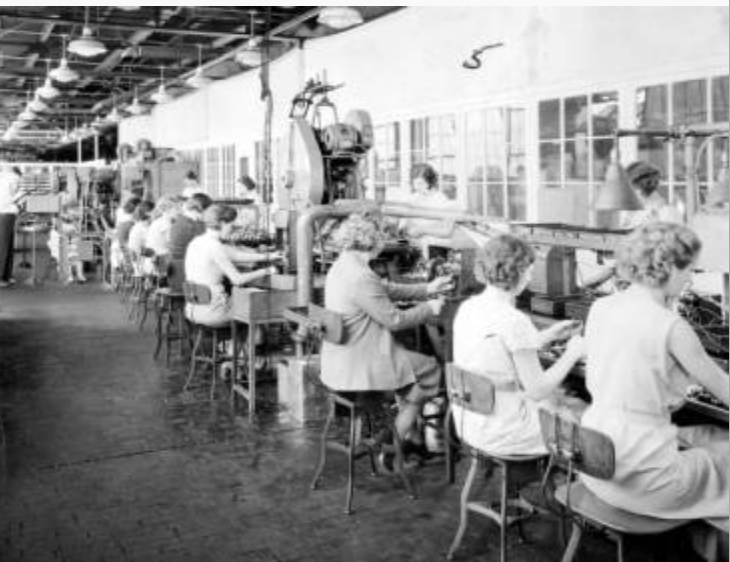
It continues to surprise me what an important role jobs play in this story. All of our quilters find themselves working, either part-time or full-time, often in jobs they never could have imagined themselves in. That fact is, that while the unemployment rate was extraordinarily high during this time (25 percent in 1933), a quarter of all women worked. They found jobs as housekeepers, cooks, beauticians, secretaries, teachers and nurses. Some women worked in industry, but faced discrimination and were paid less than men.

Women working in a spark plug factory in Ohio, 1930s.

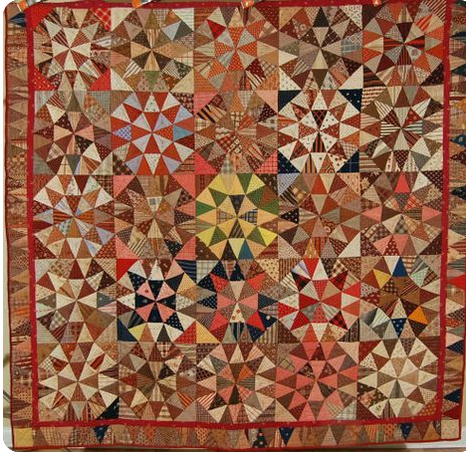
I realized the other day that although I’ve mentioned that Bess is working on a Kaleidoscope quilt, I’ve never posted a picture of one. Searching on Pinterest, I found this beautiful antique quilt to share with you:

I wish I had more information. It was pinned from eBay onto a Pinterest board, and you can no longer link back to the original page (the auction must have closed). Supposedly it was made in the 1880s, but I can’t swear to it. If you can, let me know!

There are several Kaleidoscope tutorials online, if you’re interested in giving one a try, here’s a fairly in-depth video you can take a look at:

https://www.youtube.com/watch?v=qEViYJN2iSo

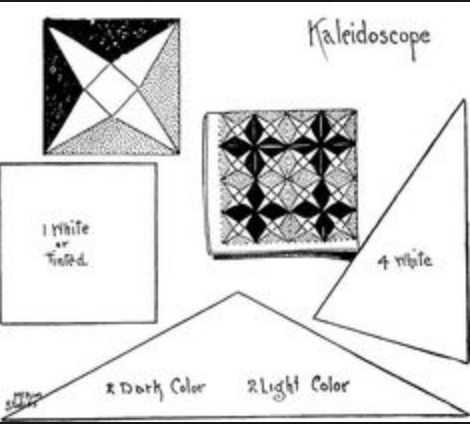
If you want to go old school, there’s always Ruby McKim:

From Ruby’s notes–“Material Estimate: The quilt contains 168 six-inch blocks, set together 12 blocks wide and 14 blocks long, making a quilt about 72 by 84 inches. You will need 2 1/2 yards of light material, 2 1/2 yards of dark and 4 1/2 yards of white, a total of 9 1/2 yards.”

Have at it, girls! See you next week!


Notes: Friendship Album, 1933: Episode 27

In Episode 27, Florence finally catches up on her stitching in a hotel room in Emporia, Kansas, while dreaming of her business back in Milton Falls.

Imagining the Milton Falls Quilting Company and all that Florence’s business entails has been so much fun for me — and at the same time it’s a little bit scary, since I don’t know all that much about starting a business. So far I’ve been using a common sense approach — if I wanted to start a quilting business where we sold patterns and kits, what would I do? If we also wanted to sell finished quilts to stores, how would I go about it? The good news for me, is that there were women in the 1930s who did just that, and I can take a cue or two from them.

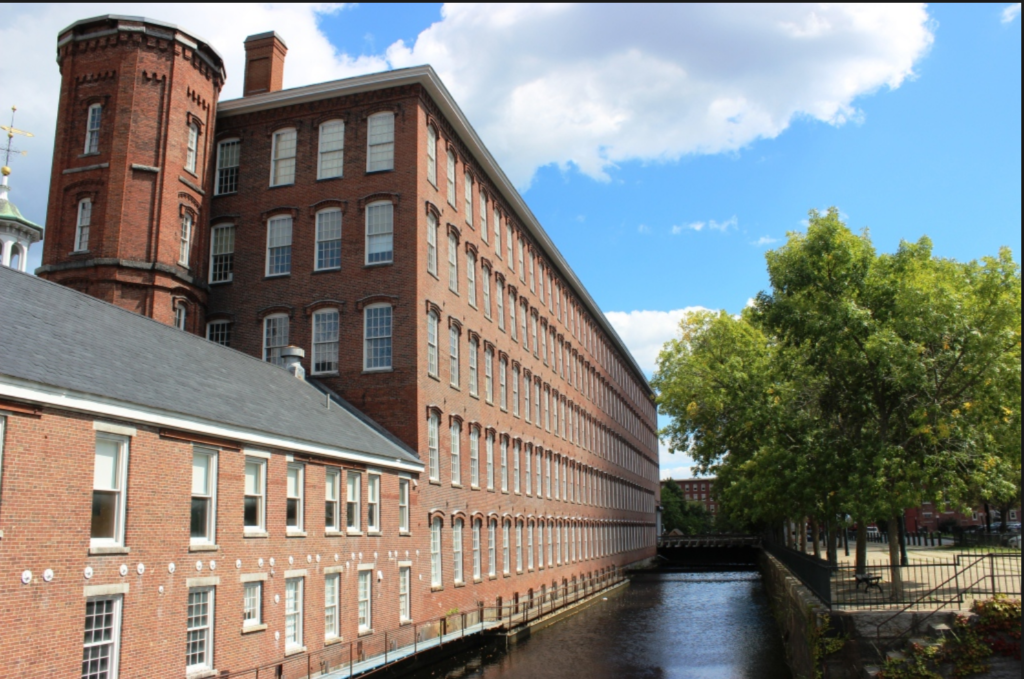
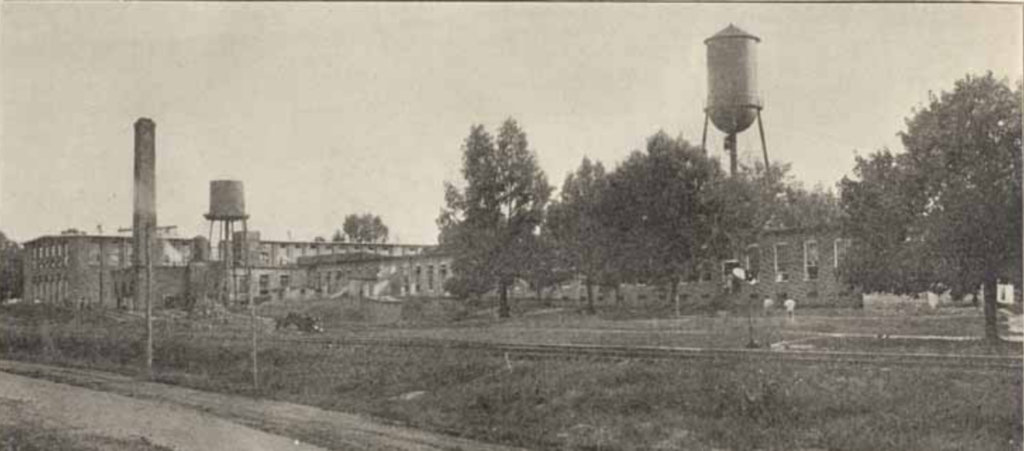
The thing I’ve had no trouble imagining is Building No. 5 — the mill building Florence has rented from Arthur Purefoy for one dollar. I can see its red bricks, and the river that rolls alongside it. I spent four years as a grad student in western Massachusetts, and when I think of mills, I think of Lowell, one of the country’s most famous mill towns.

Having lived most of my life since then in North Carolina, I also think of the textile mills like this one in Stanley, N.C., the town my mother-in-law grew up in.

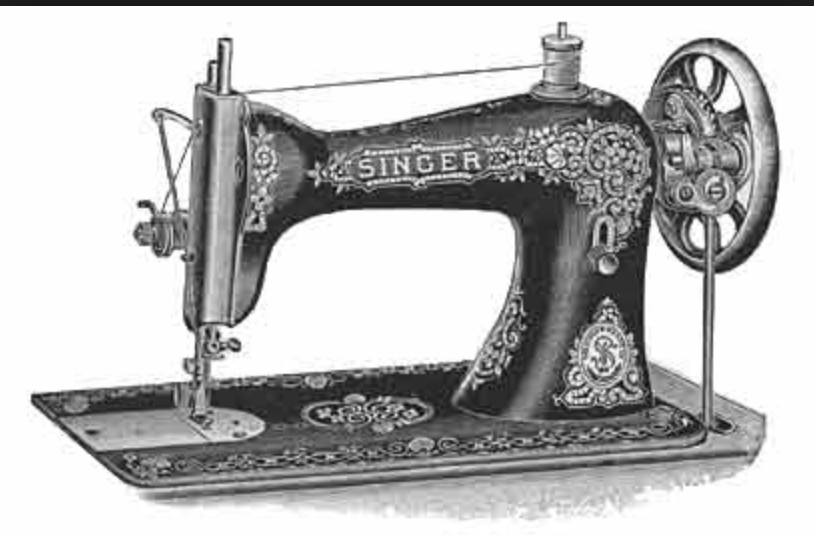
At my guild meeting a couple of weeks ago, one of our members did a marvelous presentation on vintage sewing machines. I was curious what sewing machines she thought Florence’s workers would use. Special industrial machines? She thought not. The industrial machines of that period tended to be for sturdier stuff than cotton fabric. So maybe something like this?

We’re continuing to have a great time over at the Quiltfiction Club on Facebook, the closed group in which we share quilts and quilt stories, and talk about quilt history and 1930s cake recipes. I hope you’ll come join us!

Thanks to everyone who’s given the podcast a rating and review on iTunes. If you haven’t yet, I hope you’ll consider doing so!


Notes: Friendship Album, 1933: Episode 26

In Episode 26, we’re introduced to a new character, the recently widowed Edwina Baldwin.

When Edwina reveals her age to Bess (76), I had to do the math to figure out when she was born. 1857! I suppose at some point in the future a great grandchild of mine will learn I was born in 1964, and it will seem as equally ancient (nearly prehistorical!).

Edwina was a popular girl’s name in Victorian times, and I think it suits our new friend.

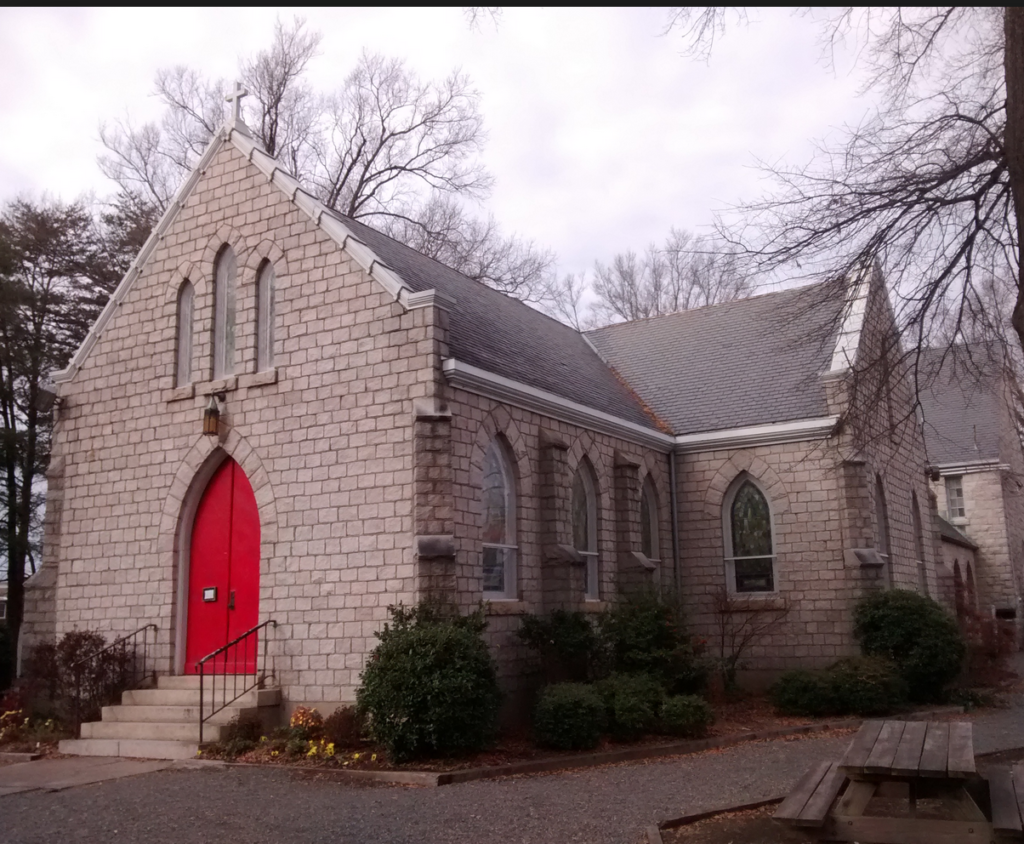
Writing this chapter (Chapter 37), I had to do something difficult for me, which is describe a building. In spite of the fact that I went to grad school to study poetry writing, description has always been hard for me. To write the scene where Bess pauses to admire the architecture of St. Luke’s, I found a picture of a church I sometimes attend, and then I had to figure out what you call the windows over the door. Turns out, they’re lancets. Who knew?

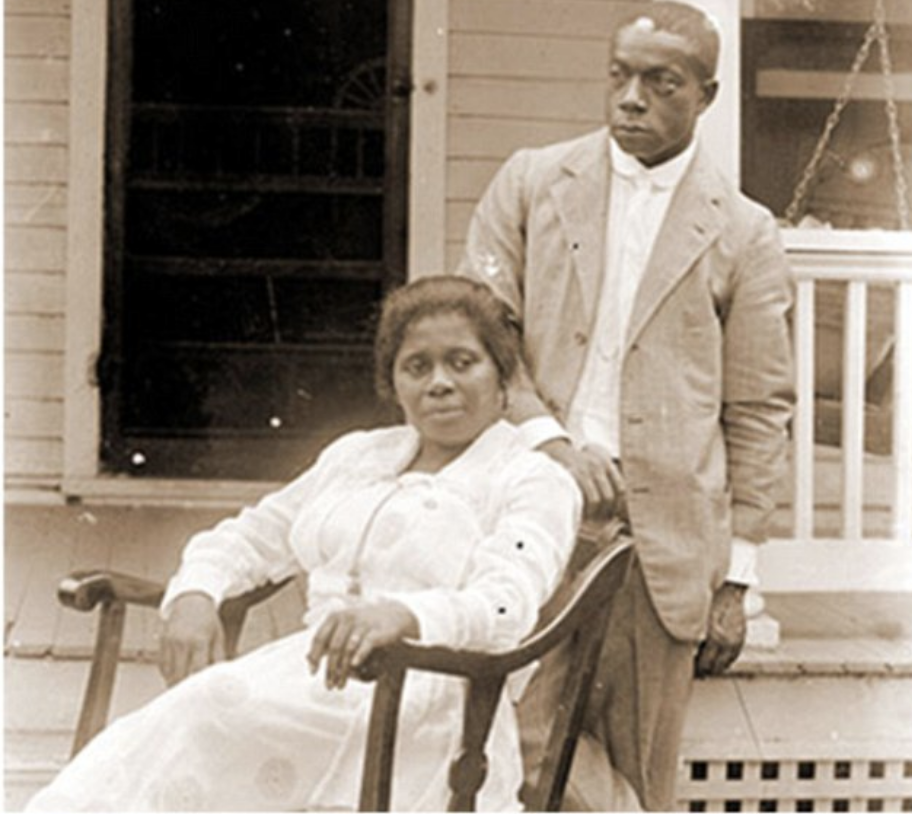
We’re continuing to have fun over at the Quiltfiction Club, Quiltfiction’s closed Facebook group (please join us!). On Wednesday I posted several pictures I’ve found that help me picture Dorothy and her home life. This one especially is close to my heart:

I like to imagine that this is young Dorothy and Wallace in front of their house on Lincoln Avenue. In reality, it’s a photograph of a couple taken in 1918. His name was John Johnson, and he was a photographer who took pictures of people in his community in Lincoln, Nebraska. The woman is Odessa Price, and this is believed to be a wedding picture. They are a remarkable looking couple, and I believe that Dorothy and Wallace might have similar, formidable presences.

If you’re enjoying the Quiltfiction Podcast, please consider reviewing it on iTunes if you haven’t already. Positive ratings and reviews help get the word out about the story. Thanks so much! See you next week!

Notes: Friendship Album, 1933: Episode 25

In Episode 25, Eula learns the fate of her Sears Contest quilt.

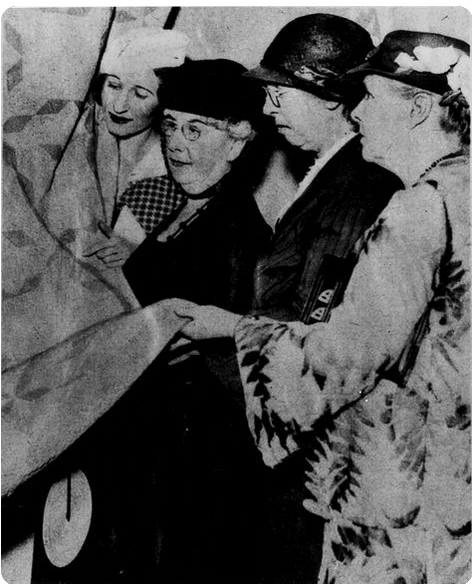
The Sears “A Century of Progress” Quilt contest has some pretty impressive statistics. According to Barbara Brackman and Merikay Waldvogel, 24,755 quilts were entered, which means that one in every two thousand American women submitted a quilt. The prize money awarded to winners totaled $7,500 — close to $150,000 in today’s dollars. Thirty quilts reached the finals. As for the winning quilt … well, to learn more about it, listen to Episode 25! Without giving too much away, I will share this picture of the judges looking at the one that got the grand prize …

If you’re interested in learning more about the contest, the 1933 World’s Fair, and quilting during the 1930s, I highly recommend Patchwork Souveniers of the 1933 World’s Fair by Merikay Waldvogel and Barbara Brackman.

If you want to spend more time in the world of 1930s quiltmaking, come join Quiltfiction’s Facebook Group, the Quiltfiction Club. We’re having a wonderful time sharing our quilts, our grandmothers’ recipes, discussing quilt history and meeting up in a virtual quilting bee every Wednesday, just like our girls in Milton Falls!

Thanks for listening! Don’t forget to tune in next week for the latest on Bess!

Notes: Friendship Album, 1933: Episode 24

In Episode 24, Emmeline learns the fate of her Sears Contest quilt and hatches a new plan to put her back on the path to quilting fame and fortune.

If you’ve listened to this week’s episode, you now know why Emmeline’s quilt didn’t win any prizes. Accident or sabotage? That will be revealed at a later date, so stay tuned! For those of you who want an idea of what Emmeline’s quilt looks like, here’s a picture of Rose Kretsinger’s “Orchid Wreath,” which Emmeline’s quilt, “Wreath of Irises,” is based on:

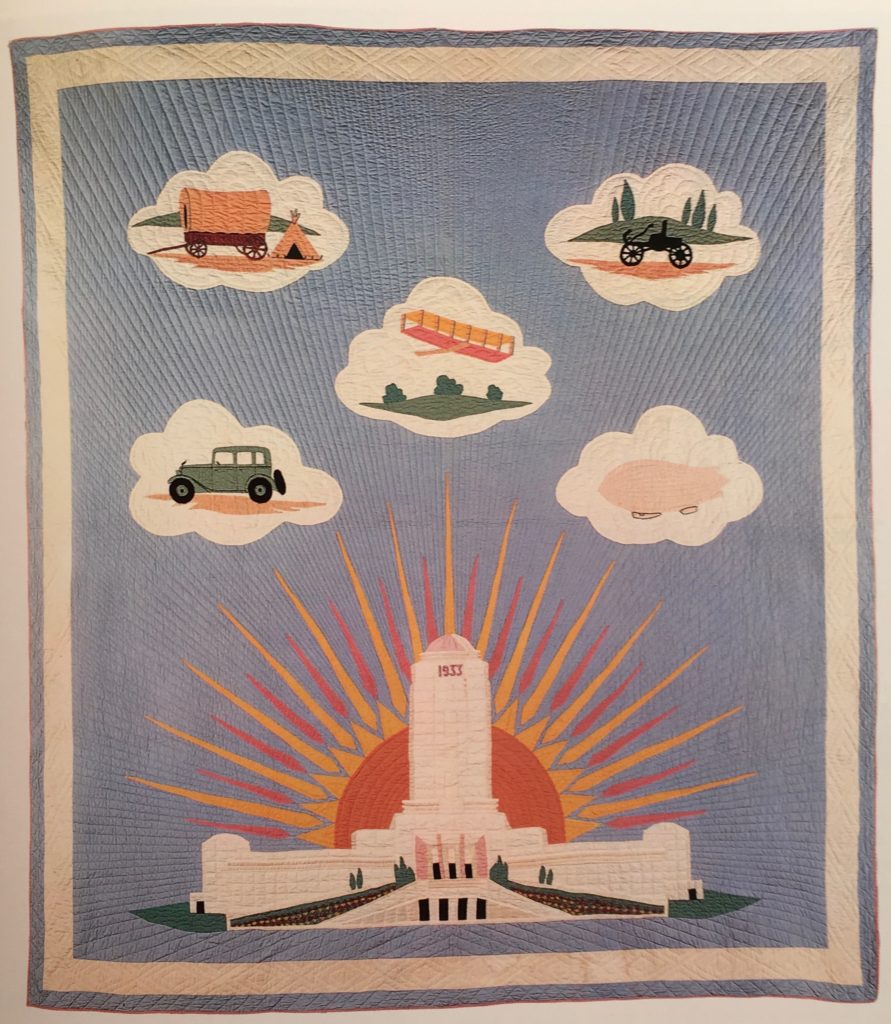
Bess’s quilt, which I don’t think is named in the book (am I wrong? Please leave the title in the comments if I am!) was designed around the theme of transportation. There were several transportation quilts in the Sears contest, including this one (maker unknown, collection of Maryilyn Forbes)

We’ve seen Dorothy’s quilt before:

Eula’s quilt is a red and white spinning wheel quilt, based on this quilt by Emma Andres of Prescott, Arizona:

This episode is our last of the year, and Chapter 35 is the last chapter in Part Two of Friendship Album, 1933. We’ll be taking a holiday break until Friday, January 11, 2019, and return with Part Three. If you’re looking for a Christmas story to listen to while you stitch over the holidays, we’ll be posting the audio version of “A Friendship Album Christmas, 1932,” tomorrow. I hope you enjoy it! Merry Christmas and happy holidays, everyone!

Notes: Friendship Album, 1933: Episode 23

In this week’s episode, Dorothy’s heart is heavy as she prepares to say goodbye to her grandchildren.

I don’t have grandchildren, and I probably won’t for a long time. But I had a grandmother, so I can say without reservation that a grandmother’s love is like no other’s, especially if you have one of the good ones. I called my grandmother Mama Re (her name was Marie), and I thought she hung the moon. Darlings, she was fabulous–White Shoulders perfume and spectator pumps, dyed black hair into her eighties, and a voice like honey. Mama Re was from Williamsburg, KY, the heart of Southern Appalachia, but somehow she grew up to look and sound like a movie star. Even her cigarette butts, with their fuschia rings of lipstick, were marvelous.

Of course, I’m thinking about grandmothers because in this episode, Dorothy is facing the loss of her grandchildren. As a way of preparing, she’s made her eldest granddaughter, Alice, a pin wheel quilt, one of the most cheerful quilts ever. I posted a picture of my pinwheel quilt top in my last blogpost, but I’ll post it again here, in case you didn’t see it:

I made the pinwheels using repro vintage floral fabric from Washington Street Fabrics. Lovely to work with!

I would love to give you some amazing insights to 1930s culture and history as relates to this episode, but the Christmas crush is crushing me and my son will be home from college in forty minutes, so I must run. Just a reminder that next week’s episode will be the last one of 2018, but on Saturday, December 22, I’ll post the audio version of “A Friendship Album Christmas, 1932.” Lots of good stuff to look forward to. Thank you so much for listening!


View Post

In which I say “Merry Christmas” with a Christmas Story!

Lots going on here in Quiltfiction Town as we wind down 2018. The big giveaway is happening–and it’s not too late to enter. We’ve still got lots of great prizes, thanks to our wonderful sponsors!

Here’s a gift for everyone–a Milton Falls Christmas story that you can download to your computer or device–it’s my way of saying “Merry Christmas and thanks for listening!” If you subscribe to the Quiltfiction newsletter, you’ll receive a link in your email box. Can’t wait that long? Click on the link below and you’ll be taken to the Book Funnel site, where you can choose where to download your copy. Feel free to share the story with your friends!

Get My Free Christmas Story

Click Book Jacket to Get Free Story

If you’d rather listen than read, I’ll be posting an audio-version of the story on Saturday, December 22nd.

Membership in the Quiltfiction Club, Quiltfiction’s closed Facebook group, is growing! If you like talking about quilts and food, and sharing stories about all sorts of things (Milkmen! 1930s dresses! What’s up with Emmeline?!), then you should join us. Just head over to the Quiltfiction Facebook page and click on “Groups.”

I finished a quilt top on Sunday–when you listen to the new episode on Friday, you’ll know the story behind it.

And I finally got started on my Christmas shopping, but I have miles to go before I sleep! Hope everyone is having fun preparing for the holidays (or doing their best to avoid the hubbub)!

Notes: Friendship Album, 1933: Episode 22

As I recorded this chapter, I realized that one of the main threads in Florence’s story is about how much control she has over her own life. Sure, she’s an independent young businesswoman, but she’s also a woman. Neither of her brothers are ogres, but they clearly feel she needs overseeing. As for Arthur Purefoy, on the one hand he’s been an enormous help in getting the Milton Falls Quilting Company on its feet. On the other hand, it’s possible he’s starting to have some proprietary feelings–about the business and Florence.

I assume at some point — maybe in this book, maybe the next (because I’m starting to think I’m not going to be able to finish up this story in one book) — Florence is going to have to think seriously about what it would mean to her career if she got married. This is going to call for research, so if you know of any good books about women business leaders in the 1930s, let me know!

Thanks to Quiltfiction Club member Virginia for letting me know that these two women are the grandmothers of a quilt shop owner in Ortonville, MI. The shop is called Mabelena’s—the women’s names are, of course, Mabel and Lena.

Have you wondered what’s going to happen with the Sears “Century of Progress” quilt contest? Lest we forget, this was a real contest, with a real winner — and an interesting twist at the end. I’m not going to give anything away here, but let’s just say that the first round of judging didn’t take long!

I’m curious — do you enter your quilts into contests? I just entered two into QuiltCon, one of which was rejected last year, but I thought I’d give another chance with a new crew of judges. As someone who has judged writing contests, I can tell you at some point the judging becomes — well, not arbitrary, but it’s rare that a story wins because it’s heads and shoulders above the stories that came in second and third place. In the end, it’s a matter of taste. Not arbitrary — the top five and six stories are usually better than the rest, but it’s quite possible another judge would have picked another winner. Same with judging quilts, I assume.

I almost didn’t enter this year. I had two quilts at QuiltCon two years ago, and it was exciting, but also provoked a lot of anxiety — how would my quilts look next to the other quilts, what if they were all wrinkled by the time they made it to Savannah, what if the judges made a horrible mistake? When neither of my entries got in last year, it was a bit of relief, to be honest. So we’ll see what happens next year. It’s fun to have a goal to work towards, but it’s also fun just to make quilts for the heck of it.

We’ve got two more episodes of Friendship Album, 1933, before we finish the current section and take a break for the holidays. However, as a Christmas treat, I’ll be posting a special Milton Falls Christmas story!

One last thing: Monday is the start of our 12-Days-of-Christmas Giveaway! The prizes are amazing and include everything from a membership to the Quilt Show to a subscription to Quiltfolk, to fabulous fabric, patterns, notions and books. The cool thing is, you only have to sign up once and you’ll be entered in each day’s drawing. So get over to our Giveaway page–you just might win!